
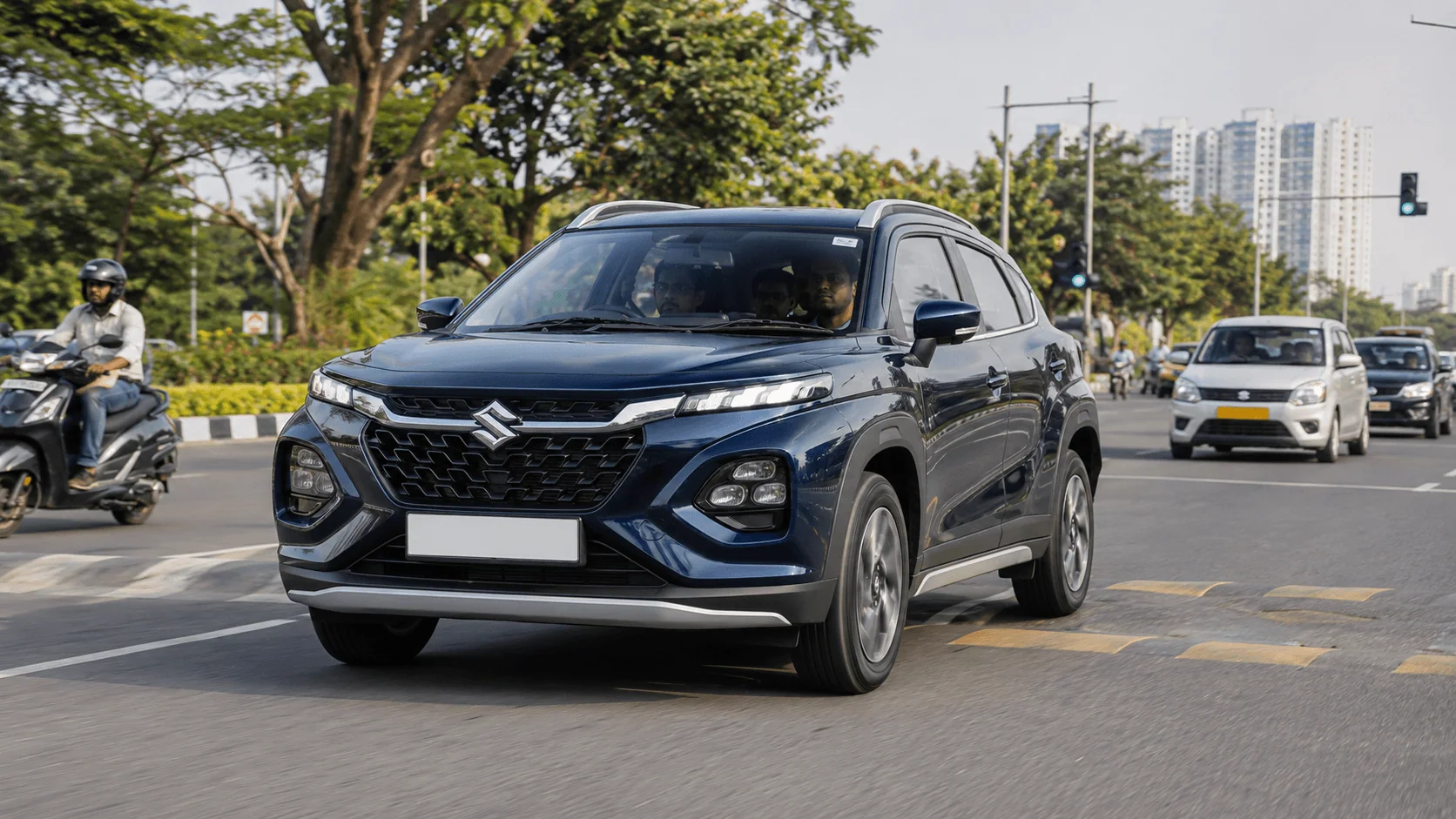
Is Fronx 1.2 underpowered? No. The 1.2 litre petrol Fronx moves about 93.5 PS for every tonne it weighs, which is normal for a sub-4-metre SUV at this price, and it makes more power than the naturally aspirated engines you’ll find in the Venue and the Sonet. There’s one honest catch, and it’s load. Fill the car up, switch the AC on, and you’ll start wishing you had the turbo’s torque.
The short answer: not underpowered, until you load it up
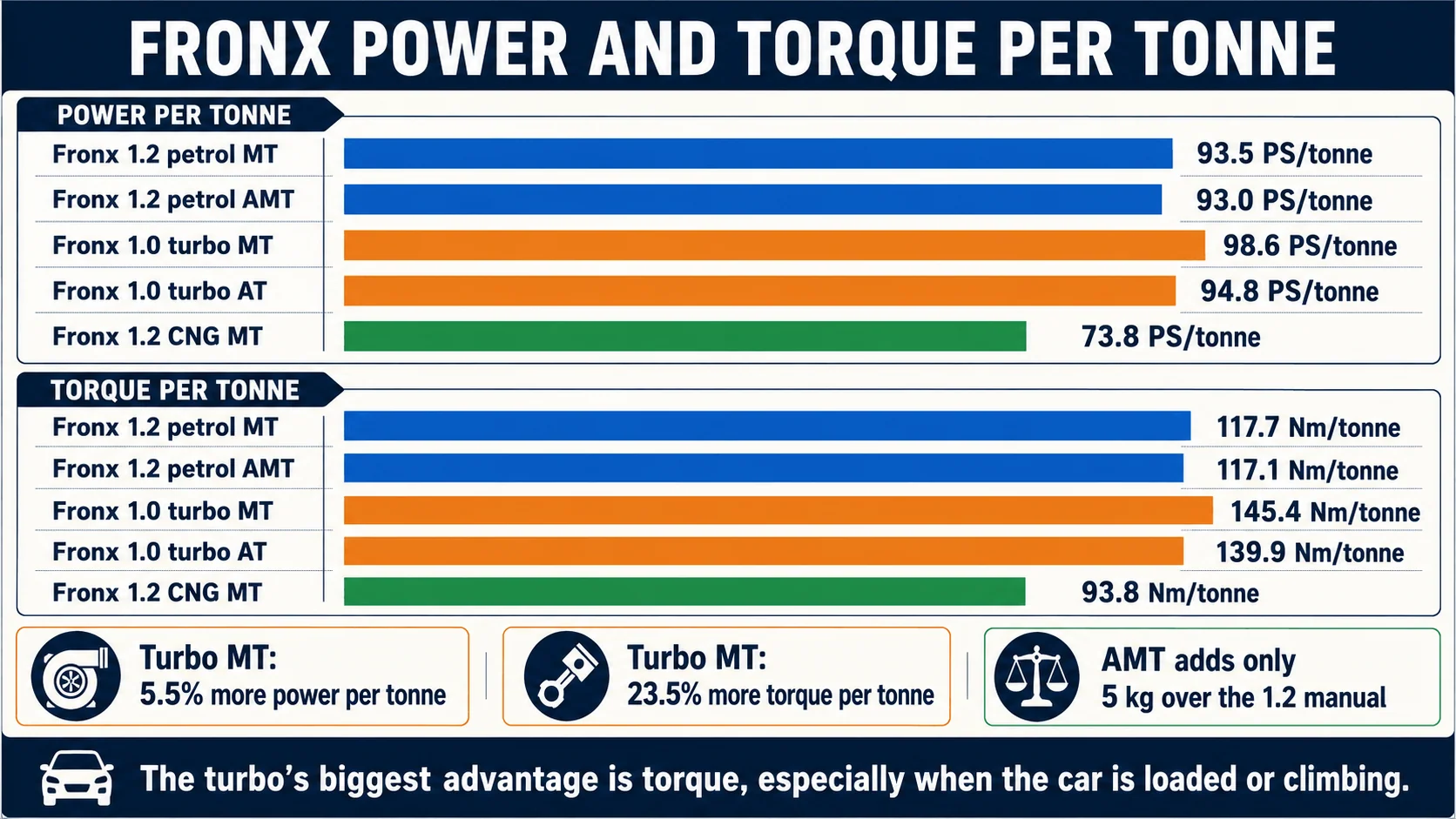
Power on its own tells you almost nothing. What counts is how much weight each unit of power has to shift. Maruti’s 1.2 litre K-Series makes 89.73 PS and 113 Nm, and the manual starts at 960 kg. Do that division and you land at roughly 93.5 PS per tonne.
So how far ahead is the turbo everyone nudges you towards? It sits at 98.6 PS per tonne. That’s about five and a half percent. Real, but a lot smaller than the showroom pitch makes it sound.
Is Fronx underpowered?
As a full range, no. Maruti sells a turbo precisely so there’s a paid answer to this question, which is where most of the doubt starts. Set that aside and you’re really asking about one engine: the 1.2 litre naturally aspirated petrol that sits under the bonnet of most Fronx models on Indian roads.
Put every powertrain on one scale and it gets clearer.
What the numbers say
| Variant | Power (PS) | Torque (Nm) | Kerb weight (kg) | Power per tonne (PS) | Torque per tonne (Nm) |
|---|---|---|---|---|---|
| Fronx 1.2 petrol MT | 89.73 | 113 | 960 | 93.5 | 117.7 |
| Fronx 1.2 petrol AMT | 89.73 | 113 | 965 | 93.0 | 117.1 |
| Fronx 1.0 turbo MT | 100.06 | 147.6 | 1015 | 98.6 | 145.4 |
| Fronx 1.0 turbo AT | 100.06 | 147.6 | 1055 | 94.8 | 139.9 |
| Fronx 1.2 CNG MT | 77.50 | 98.5 | 1050 | 73.8 | 93.8 |
| Maruti Baleno 1.2 MT | 89.70 | 113 | 925 | 97.0 | 122.2 |
Kerb weights are the lighter end of Maruti’s published range for each powertrain, and every ratio uses that figure so the rows stay comparable.
Three things jump out. The turbo’s advantage isn’t really power: it’s 5.5 percent clear on power per tonne, but 23.5 percent clear on torque per tonne, and torque is what pulls a loaded car up a gradient without you reaching for a lower gear. Next, the AMT costs you almost nothing. Same engine, five extra kilos, half a point of power per tonne. Pick it for traffic and stop worrying about it. Then there’s the Baleno, which runs the identical engine in a lighter shell and returns 97.0 PS per tonne. The Fronx’s raised body costs 3.7 percent. That’s the whole price of the SUV stance.
Hyundai and Kia don’t publish kerb weights for the Venue or the Sonet, so we won’t invent one to fill a cell. Engine output we can compare, and both those 1.2 litre naturally aspirated units make 83 PS. The Fronx’s 89.73 PS is roughly 8 percent more than either.
Where the standard engine gets stretched
Now the part those ratios hide. Kerb weight means the car empty. Seat four adults at about 75 kg each and the 1.2 manual is hauling 1,260 kg, which pulls it down to roughly 71 PS per tonne. Load it to Maruti’s rated gross weight of 1,450 kg and you’re at about 62 PS per tonne and 78 Nm per tonne.
That’s when the 1.2 runs short. It isn’t a flaw, it’s arithmetic, and it applies to every small naturally aspirated engine sold here. Run the AC through a long climb and the compressor takes its share too. A turbo engine calls on boost at that point. The 1.2 calls on your gearbox, so you sit in third where a turbo would pull in fourth.
Owner threads about the 1.2 land in much the same place: easy enough around town, more downshifting on ghat roads with a full car. That matches what the ratios predict.
The CNG is where underpowered stops being an exaggeration. On gas the engine drops to 77.5 PS and 98.5 Nm, and the cylinder adds close to 90 kg. At 73.8 PS per tonne it sits 21 percent under the petrol manual. Brilliant on running costs at 28.51 km/kg. Still the slowest Fronx you can buy.
If you want more punch: the turbo option
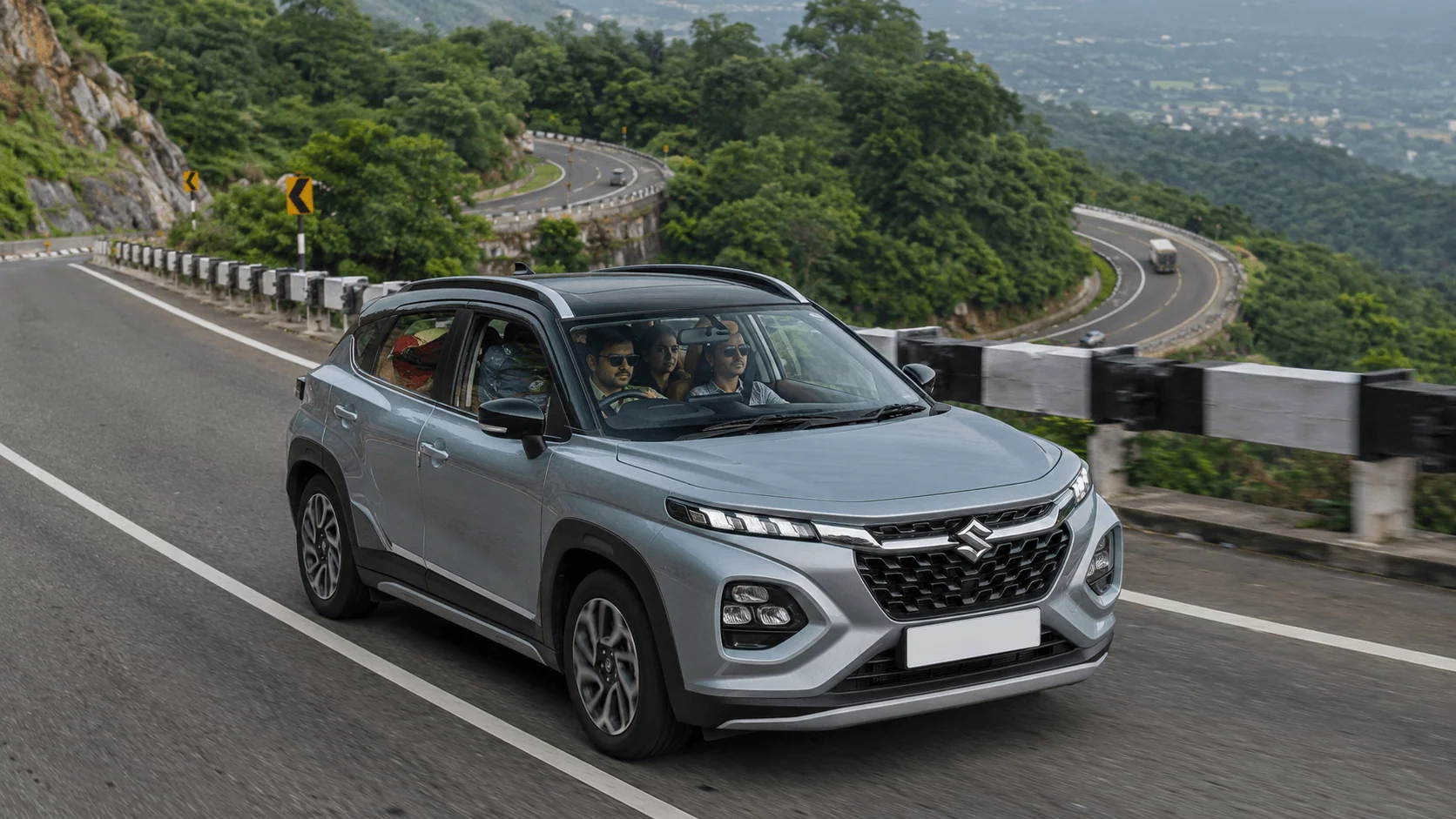
The jump costs less than most buyers expect. A Delta Plus 1.2 is ₹8.05 lakh ex-showroom and the Delta Plus Turbo is ₹8.92 lakh, so you’re paying about ₹87,000 for the engine at matching trim. Worth it? Depends entirely on how often you drive loaded or climb, and we’ve gone through that decision properly in which is better, Fronx turbo or normal.
Want the full ladder of engines, trims and prices in one place? The Maruti Fronx variant table lists every one.
What this means at the dealership
Don’t let anyone talk you out of the 1.2 with vague warnings about power. Ask how the car will actually get used. City running with two or three people aboard, and the 1.2 manual or AMT has plenty in hand. Regular highway trips with a full car, hill roads, or a loaded roof carrier, and the turbo’s torque earns its ₹87,000. Planning to run on gas? Budget for the slowest version of this car.
Then price the exact variant where you live, because state taxes and registration shift the total quite a bit. Start with the Delta Plus 1.2 On Road price in Mumbai and switch to your own city from there.