
If you’re looking for the short answer, Maruti Suzuki is still the safest answer if low running cost is your first filter. But 2026 isn’t as simple as “Maruti cheap, everyone else expensive”. Hyundai and Kia are much closer on scheduled service for some petrol cars, while Tata and Mahindra can look reasonable on smaller visits and then jump at the bigger intervals.
We checked official service calculators from Hyundai, Kia and Mahindra, Maruti’s latest service-network disclosure, Tata service material, and model-level maintenance schedules where brand-wide public pricing still isn’t fully open. That matters because a clean brand average doesn’t really exist in public data right now. So the comparison below uses representative public examples, not brand slogans, and you can judge the car you may actually buy.
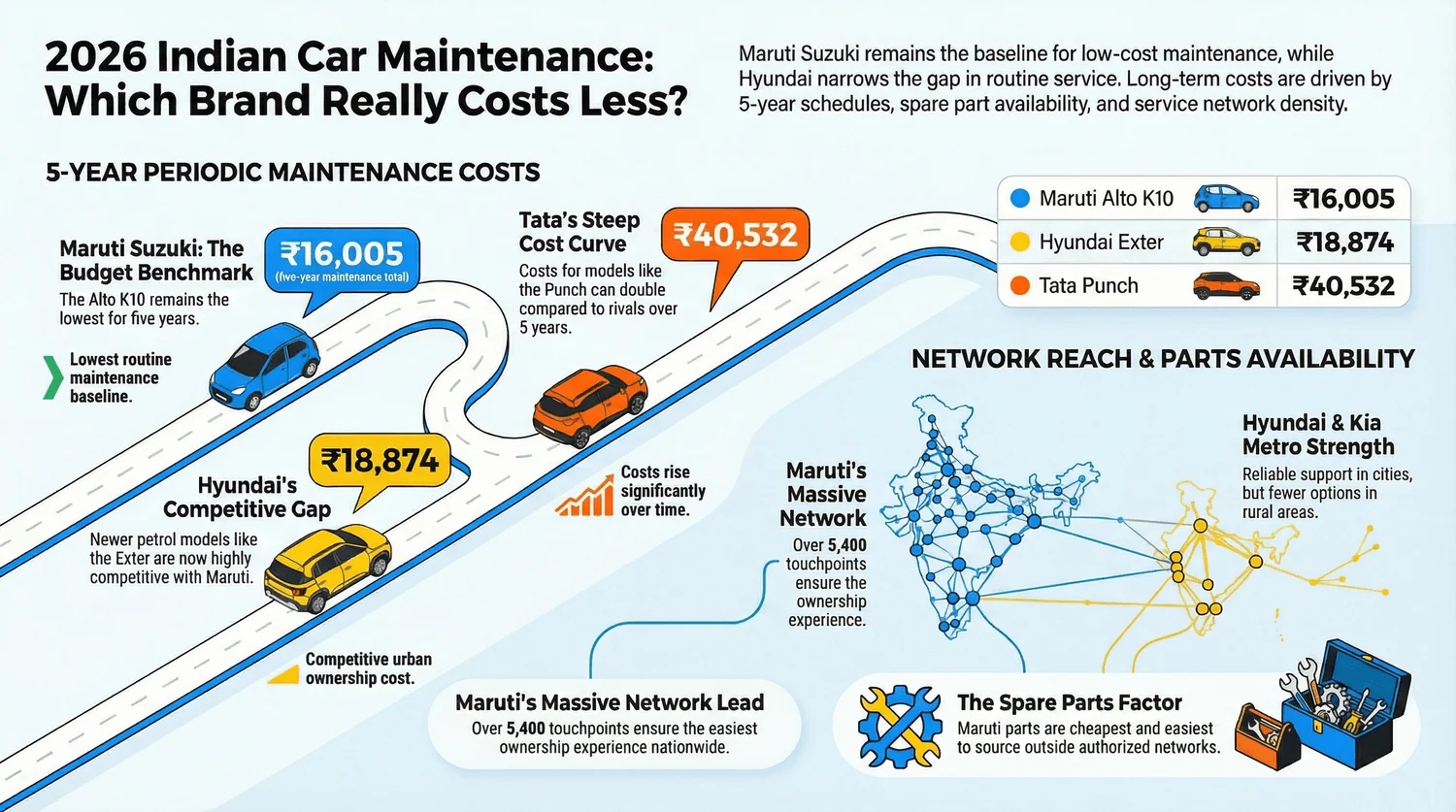
| Brand | Representative public example | What it tells you | Quick verdict |
|---|---|---|---|
| Maruti Suzuki | Alto K10 petrol: about ₹16,005 for the first 50,000km / 5 years. Swift petrol: about ₹21,516 for the first 50,000km / 5 years | Maruti still sets the baseline for low routine maintenance on mainstream petrol cars | Best pick for lowest running cost |
| Hyundai | Exter petrol: about ₹18,874 for the first 50,000km / 5 years. Official calculator sample also showed ₹1,727 at 10,000km and ₹5,444 at 30,000km in a Delhi labour group | Hyundai is genuinely competitive on some new petrol schedules | Great for predictable urban ownership |
| Tata Motors | Punch petrol: about ₹40,532 for the first 50,000km / 5 years | Tata can be acceptable on smaller routine jobs, but the total climbs faster over time | Buy for safety and build, not the lowest upkeep |
| Mahindra | Bolero 1.5 diesel: about ₹32,464 for the first 50,000km / 5 years | Mahindra is rarely the cheapest, but the numbers can still work for utility-focused buyers | Better for heavy-use SUV or rural buyers |
| Kia | Sonet 1.2 petrol official calculator sample in Delhi: about ₹1,245 at 10,000km, ₹1,916 at 20,000km, ₹3,897 at 30,000km | Kia’s routine service pattern is closer to Hyundai than many buyers assume | Fine for metro and big tier-2 city owners |
These are representative public examples, not a segment-for-segment match. An Alto K10 and a Bolero do not solve the same job.
If your shortlist is still open, start with Maruti when maintenance cost is the main filter. Give Hyundai and Kia a proper look if you want more features without a scary scheduled-service bill. And if you’re leaning Tata or Mahindra, check the exact model schedule and your nearest workshop before you pay the booking amount.
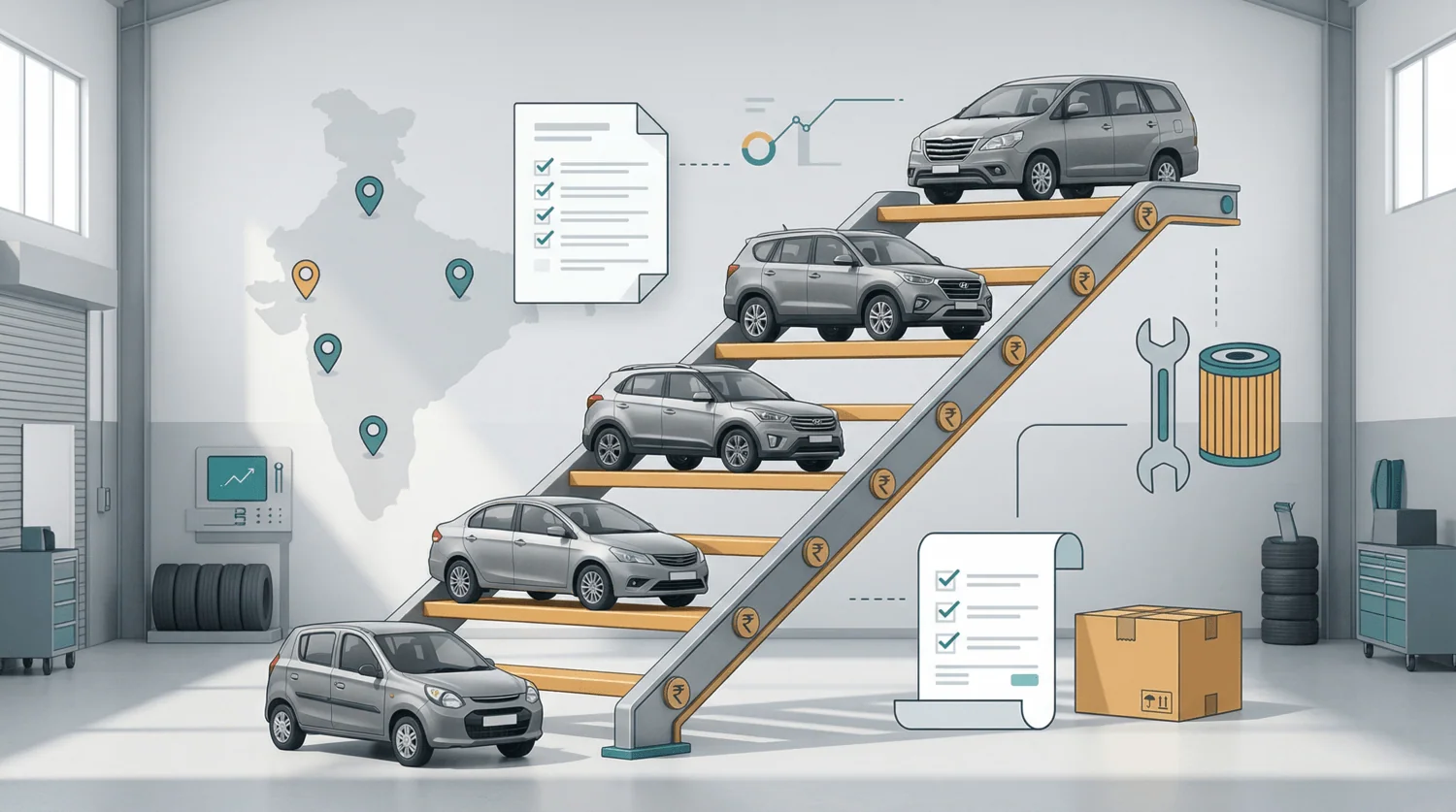
Average Service Cost by Brand
The first thing to get out of the way is simple. There is no single flat “brand average” you can trust. Your bill depends more on these four things than on the badge:
- The model and engine
- The city and labour slab
- The service interval
- Whether you’re looking at routine service, wear-and-tear, or repair work
That’s why reputation and real bills often drift apart. A modern Hyundai Exter petrol can post very sensible scheduled-service numbers because Hyundai has stretched some replacement intervals and keeps labour free for the first 20,000km on that model schedule. A simpler Maruti hatchback may still win the long game because parts are cheaper, workshops are easier to find, and the ownership experience is easier once warranty ends.
Another point buyers miss is simple. Free service usually means labour-free service, not zero-cost service. You’ll still pay for engine oil, the oil filter, shop consumables, plus any other due item. That’s why an early visit can still land in four figures even when the brand says the service is free.
The same car service price list also changes by city. Hyundai’s service calculator groups cities by labour bands. Mahindra’s public service-cost page says the labour cost shown is indicative for Mumbai and New Delhi. So if you’re comparing Delhi, Bengaluru, Jaipur and Kochi as if they should return the same bill, the math is already off. If you buy in one city and service in another, you should expect a difference.
The practical read looks like this:
- Maruti Suzuki stays the low-risk answer for routine upkeep.
- Hyundai is strong on calculator transparency and scheduled service.
- Kia sits close to Hyundai on routine maintenance philosophy.
- Tata can look fine early, but the cost curve rises faster.
- Mahindra is rarely the cheapest, but it can still make sense if you really need a utility vehicle or a body-on-frame SUV.
Use that lens and you’ll compare the way you actually own a car.
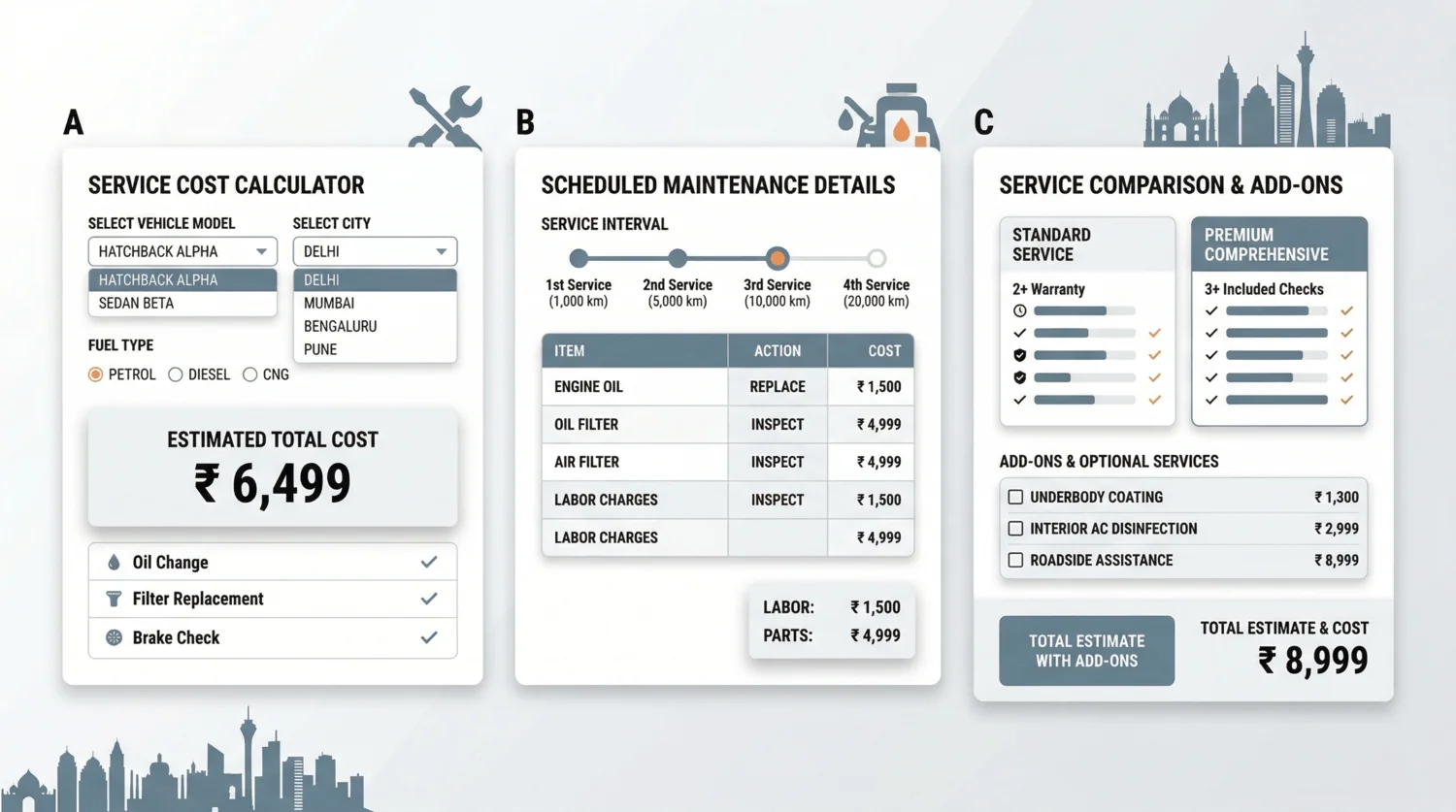
If you’re trying to compare car maintenance cost by brand before buying, ask a tighter question. What will this exact car cost you over 3 to 5 years in your city? That’s the question that actually saves you money.
Maruti vs Tata vs Hyundai — Maintenance Cost
This is the comparison most buyers actually care about. And it’s less straightforward than the old one-line answer you still see on social media.
Here is the clearest model-level snapshot from the public data we checked:
| Model example | First 50,000km / 5 years periodic maintenance | What stands out |
|---|---|---|
| Maruti Suzuki Alto K10 petrol | ₹16,005 | Very hard to beat on simple, low-cost ownership |
| Maruti Suzuki Swift petrol | ₹21,516 | Still low, even after the bill rises over the first few major intervals |
| Hyundai Exter petrol | ₹18,874 | Strong result helped by labour-free early services and stretched replacement intervals |
| Tata Punch petrol | ₹40,532 | The five-year total rises much faster than most buyers expect |
The old rule of thumb was that Maruti would always be cheaper than Hyundai. In broad ownership terms, that is still mostly true. Lower parts pricing, deep workshop familiarity, and the country’s widest service reach make Maruti the easiest brand to live with once the car is out of warranty. If you want the least maintenance risk, this is still the cleanest answer.
Hyundai is the interesting case. On newer petrol cars like the Exter, the service schedule is far more reasonable than many buyers expect. Labour stays free for the first 20,000km, replacement intervals are spaced sensibly, and that keeps early bills in check. If most of your driving is urban and you care about cleaner workshop processes, you’ll find Hyundai much closer to Maruti than it used to be.
Tata is the brand where buyers need to be most careful with assumptions. Early visits can look normal. The longer schedule is where the cost gap opens. On the Punch petrol, the five-year periodic-maintenance total already sits far above the Exter and the smaller Maruti examples here. If you plan to keep the car beyond the first few years, you need to look at the full schedule, not only the first two bills.
So which way should you lean?
- Pick Maruti if you want the safest long-term answer on ownership cost.
- Give Hyundai a serious look if you’re choosing a newer petrol car and want a more polished workshop experience.
- Choose Tata only after checking the exact model’s long-term schedule and the reputation of the workshop you’ll actually use.
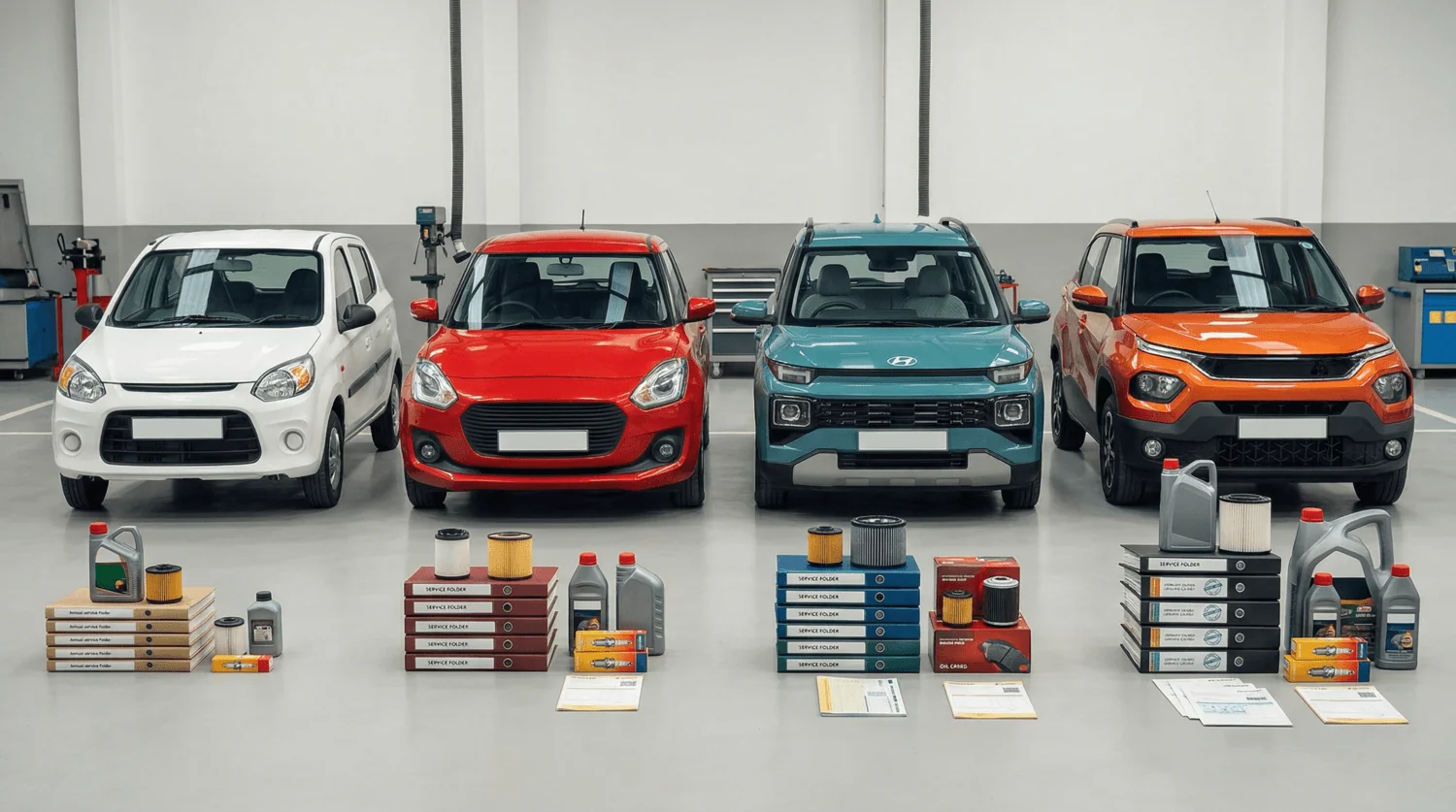
If you want the balanced real-world answer, Maruti remains the cheapest bet, Hyundai has narrowed the gap more than many buyers realise, and Tata needs model-by-model homework before you assume anything.
Which Brand Has Cheapest Spare Parts?
If the question is only about spare parts, Maruti Suzuki still comes out ahead in India.
Part of that is simple sticker price. The bigger reason is reach. Genuine parts are easier to source, independent garages know the cars well, and even outside the authorised network you usually have more fallback options. If your car is out of warranty, you’ll feel that difference quickly.
Hyundai and Kia sit one step above. Routine service items don’t usually look scary. Where the bill can rise is on sensors, trim pieces, electronic modules and body panels. Kia is also more dependent on its own network in smaller towns because the independent parts market isn’t as deep yet.
For Tata and Mahindra, the question shifts a bit. Owners often buy larger or more utility-focused vehicles, so parts start from a different cost base. You may be paying for tougher hardware, bigger tyres or heavier suspension parts. That doesn’t make the bill low. It just means a hatchback benchmark is the wrong comparison.
From the service data we checked, early bills on Hyundai and Kia are still dominated by routine items. Think engine oil, the oil filter, plus air and cabin filters. For example:
- A Kia Sonet 1.2 petrol official calculator sample showed ₹1,164 for engine oil and ₹81 for the oil filter at 10,000km.
- A Hyundai calculator sample showed ₹1,620 for engine oil and ₹107 for the oil filter on a small petrol service example.
That tells you what the first few workshop bills are really made of. On mass-market cars, the early visits are mostly about oil, filters, fluids and labour. You’ll usually feel the spare-parts pain later, especially after warranty or after body and electrical repairs.
This is how the brands line up:
| Brand | Spare-parts cost trend | Real-world effect |
|---|---|---|
| Maruti Suzuki | Cheapest common parts and deepest parts network | Lowest pain after warranty |
| Hyundai | Common parts manageable, premium on sensors, trim and some electronics | Predictable, but not rock-bottom cheap |
| Kia | Similar mechanical philosophy to Hyundai, more OEM dependence in smaller towns | Fine in cities, harder to live with outside them |
| Tata Motors | Routine items can be okay, model-specific parts and electronics can sting | Look beyond the first few services |
| Mahindra | Not cheap in absolute terms, but built around tougher utility use | Acceptable if you need rugged hardware |
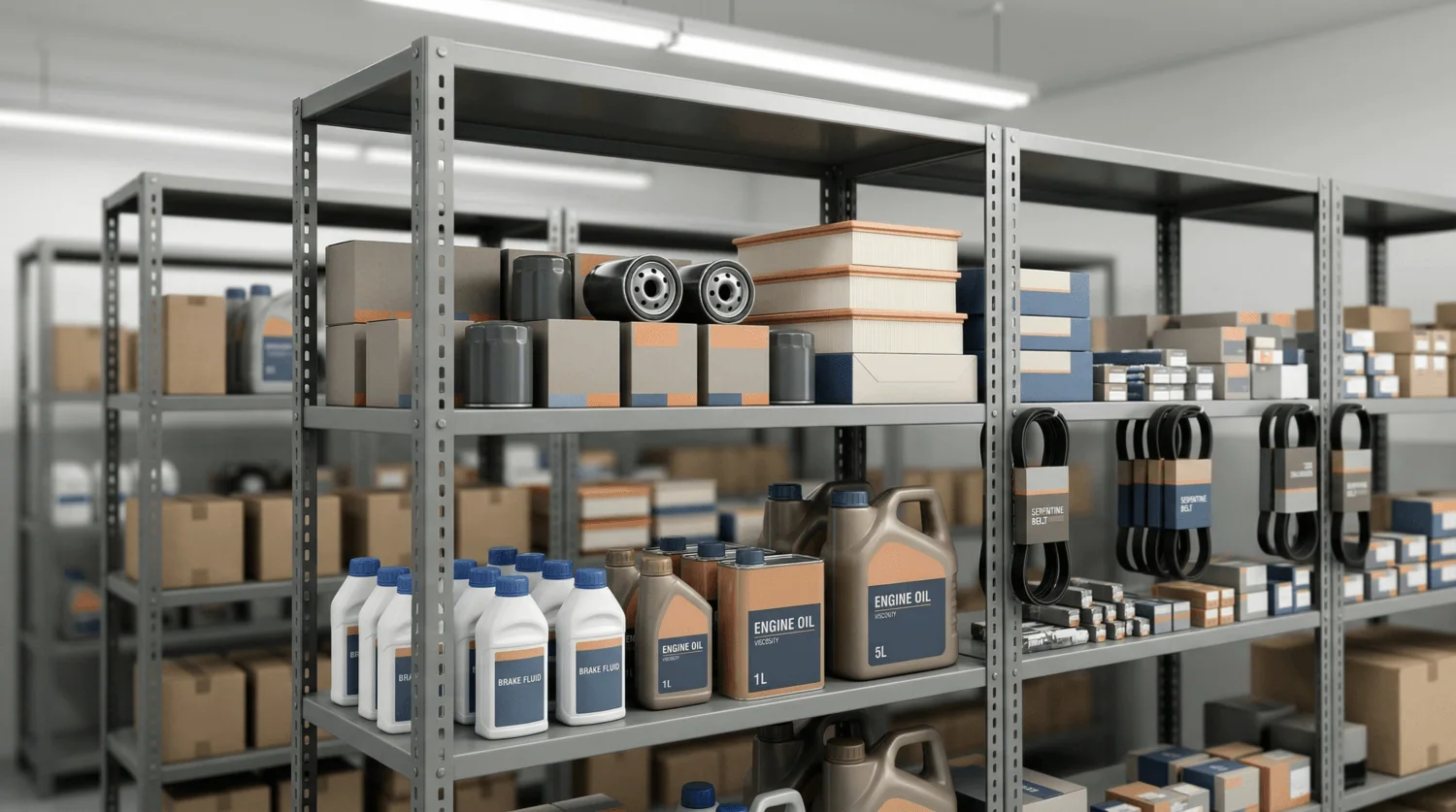
If you plan to keep the car well past 5 years, spare-parts reach matters almost as much as the periodic service schedule. That’s one big reason Maruti stays so strong in this discussion even when a specific Hyundai interval looks competitive, and you’ll notice it more once your car ages.
Service Network Coverage Comparison
Service network size doesn’t show up directly on the invoice, but it changes ownership cost more than most buyers expect.
If your nearest workshop is far away, the car isn’t really cheap to maintain even if the official service menu looks attractive online. You pay for that in travel time, towing distance, parts wait time and repeat visits.
Here is the latest practical picture from the public sources we checked:
| Brand | Latest public network signal | What it means for buyers |
|---|---|---|
| Maruti Suzuki | 5,400+ service touchpoints in India, disclosed in June 2025 | Still the easiest brand to own almost anywhere |
| Hyundai | 1,606 service touchpoints as of March 31, 2025 | Strong city and highway support, good ownership confidence |
| Kia | 655 touchpoints on its current service page | Comfortable in metros and large tier-2 cities, less relaxed in smaller towns |
| Mahindra | Official service-cost calculator and booking system are publicly live | Check your exact city and nearest workshop before buying |
| Tata Motors | Official service products, dealer locator and Service Connect app are live | Dealer execution matters more than headline size |
Maruti is the clear winner here. If you live outside a metro, do inter-city drives often, or simply want the least ownership friction, Maruti’s network advantage is still massive.
Hyundai is the easiest alternative if you don’t want a Maruti. Its network is much smaller than Maruti’s, but it is still broad enough to give most buyers confidence in cities, on highways and across major state routes.
Kia is comfortable if your ownership is metro-heavy or centred around a strong tier-2 city. It isn’t a niche brand anymore, but it still doesn’t give the same everywhere confidence as Maruti or Hyundai.
For Tata and Mahindra, the smarter move is local homework, not brochure math:
- Check the exact workshop nearest to your home.
- Check the next nearest one on your usual highway route.
- Ask current owners about repeat jobs, parts wait time and billing clarity.
That city-level homework matters more than brochure-level brand comparison.
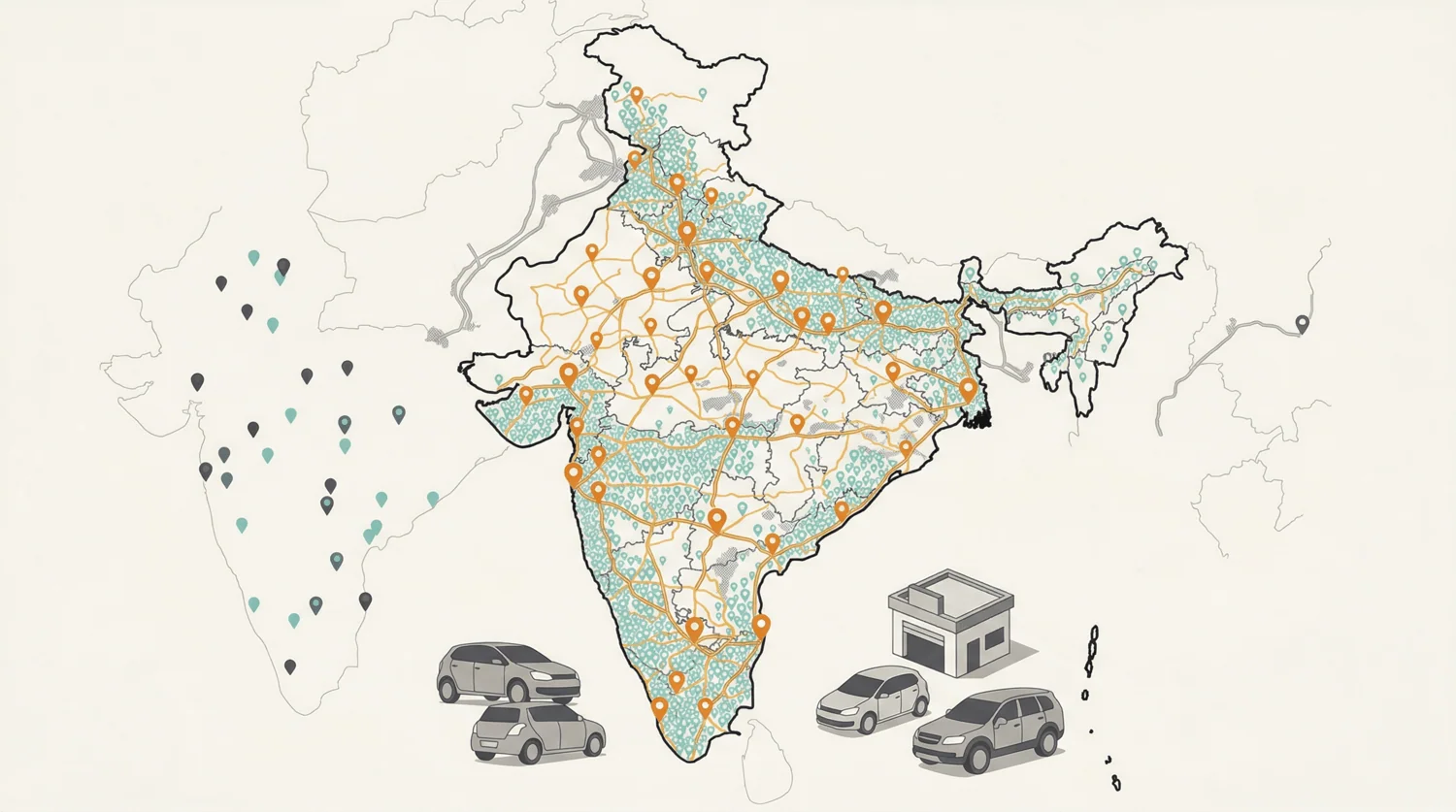
If you are buying for small-town ownership, post-warranty peace of mind or long-term use, you should put network strength right next to ex-showroom price on your checklist.
Tips to Reduce Maintenance Cost
No matter which brand you buy, these are the moves that keep service cost under control in India:
If you stay disciplined here, your bills usually stay calmer too.
- Follow the owner’s manual, not just the adviser’s pitch. The schedule in the manual is your baseline for fluids, filters, plugs and periodic replacements.
- Ask for a written estimate before the job starts. Once the car is inside the workshop, it gets much harder to push back on upsells.
- Learn the difference between due work and add-ons. Engine oil, filters, brake fluid and coolant are normal. Premium cleaning packages, coatings and “urgent” treatments often aren’t.
- During warranty, keep invoices and stick to approved parts and fluids. Your warranty coverage details matter as much as the service bill.
- Compare authorised workshops for bigger jobs. Even when parts cost is similar, labour handling and add-on pressure can vary a lot.
- Use a proper maintenance schedule so you know what is actually due each month, each season and each mileage interval.
- Choose the powertrain for your real use, not the brochure fantasy. A city-only diesel or a more complex gearbox can punish you later even if the purchase deal looked tempting.
- Do basic monthly checks yourself. Tyre pressure, coolant level, battery condition and oil leaks are much cheaper to catch early than after a roadside failure.
- Keep service history clean if resale matters to you. Saving a little now isn’t worth much if weak records hit resale later.
The biggest money-saver is still simple. Buy the right car for your use case. A small naturally aspirated petrol hatchback will almost always beat a turbo SUV or diesel utility vehicle on maintenance, and that’s true long after the showroom discount is forgotten.

FAQs
Which car brand has cheapest maintenance in India?
For mainstream petrol cars, Maruti Suzuki is still the safest answer. It combines low routine service bills, cheap common parts and the widest service reach in the country.
Is Tata expensive to maintain?
Not always at the start. Smaller Tata cars can look fine on early routine services. But over 5 years, the total can rise much faster than many buyers expect, and the experience becomes more workshop-dependent than Maruti or Hyundai.
Maruti vs Hyundai service cost – which is lower?
Maruti is still the safer long-term answer on overall affordability. But some newer Hyundai petrol cars are much more competitive than older brand stereotypes suggest. Check the exact model schedule before deciding.
Does city change service cost in India?
Yes. Labour rates, workshop category and city-wise service-calculator logic can change the total. That’s why Delhi, Mumbai, Bengaluru and smaller cities should not be treated as one pricing bucket.
Are free services actually free?
Usually no. Labour may be free for the first service or first few scheduled visits, but engine oil, oil filters, consumables and other due items are still billed.
Which brand is safest for small-town ownership?
Maruti Suzuki is still the easiest answer because of reach and familiarity. Hyundai is the next safest mass-market choice. With Tata and Mahindra, the right answer depends much more on your nearest specific workshop.
Should I decide only by annual service cost?
No. Look at 3-year and 5-year totals, spare-parts reach, workshop reputation, warranty rules and local network coverage. A car with a slightly higher one-year bill can still be the better ownership choice if the rest of the experience is smoother.
Before you sign for a new car, check the exact service schedule and the workshop nearest your home. That’s where the real ownership cost shows up.