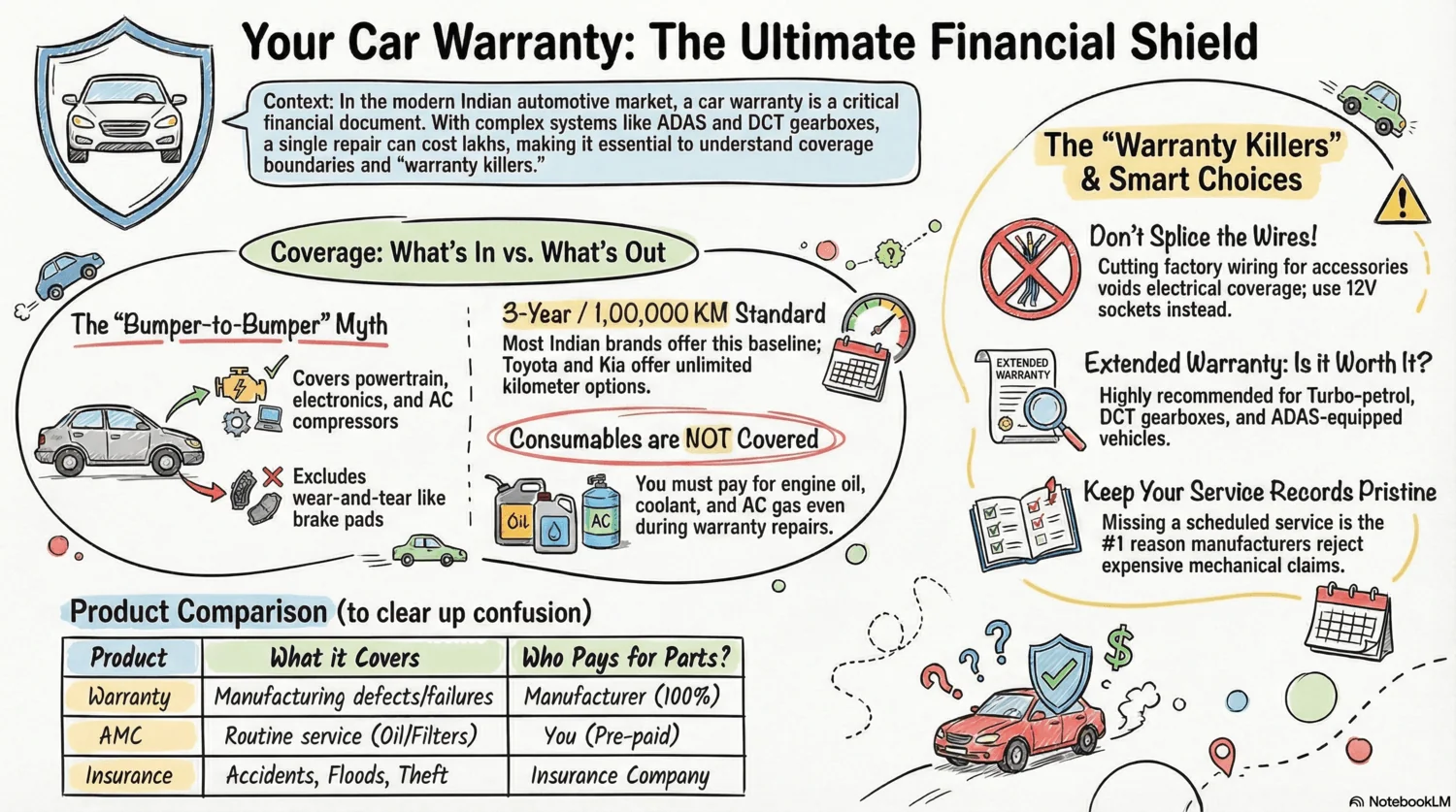
A car warranty is a manufacturer’s promise that your vehicle is free from defects in materials and workmanship. If a component fails because of a manufacturing fault within the warranty period, you get free repairs. No parts cost, no labor charges. Most new cars in India now ship with a 3-year or 1,00,000 km standard warranty, whichever comes first.
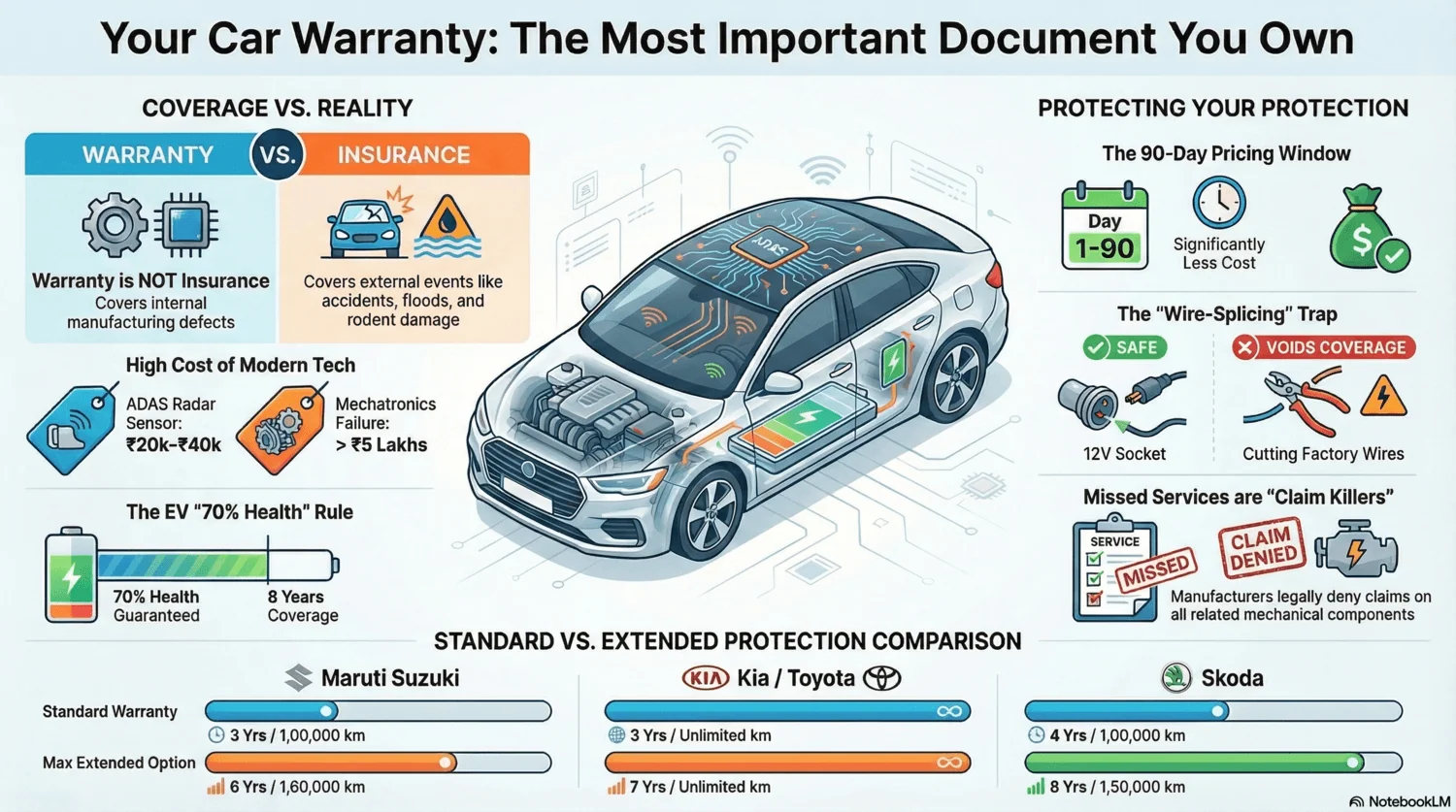
So why should you care about something that sounds like legal paperwork? Because modern cars aren’t simple machines anymore. They’re packed with ADAS sensors, turbo-petrol engines, and DCT gearboxes. Connected car tech adds another layer of complexity. A single radar sensor replacement can cost ₹20,000 to ₹40,000. A DSG mechatronics failure? That bill crosses ₹5,00,000 in some cases. Your warranty booklet isn’t a formality. It’s the most important financial document you get with your car.
This guide covers exactly what falls under warranty, what doesn’t, how each brand stacks up, what mistakes can kill your coverage, and whether the extended warranty actually makes financial sense.
What Is Covered Under Car Warranty in India?
In India, the standard manufacturer warranty is sometimes called a “bumper-to-bumper” warranty. That name is a bit misleading because several parts are excluded. But it does cover the majority of your car’s critical systems.
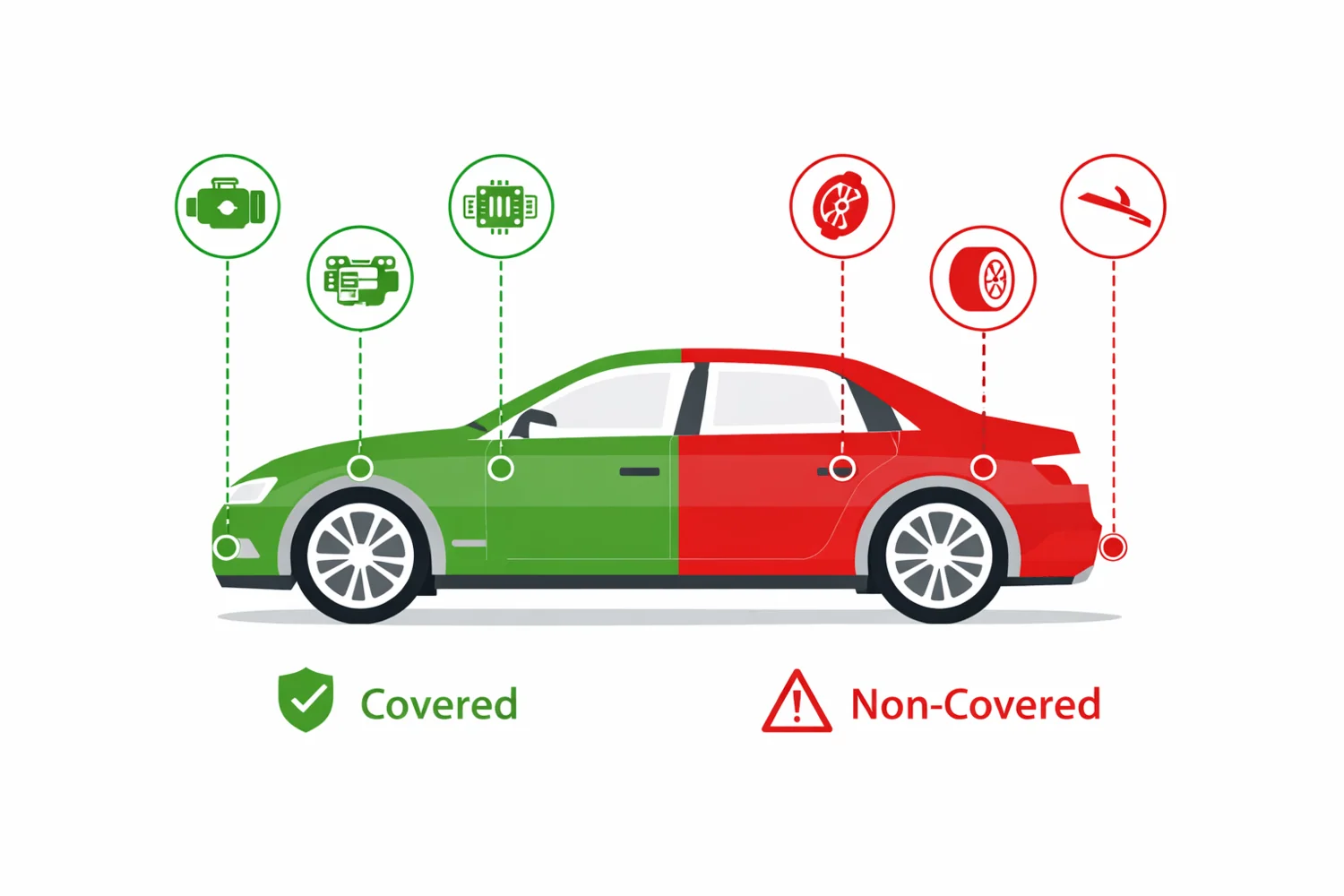
Powertrain. This is the big one. Your engine block, cylinder heads, oil pumps, the complete transmission system including gearbox casing and torque converters. Powertrain repairs are the most expensive, so this coverage matters more than anything else.
Fuel system. High-pressure pumps and injectors fall under warranty, as long as there’s no evidence of fuel adulteration.
Electrical and electronics. The ECU, wiring harnesses, factory-fitted infotainment, and the full sensor array covering emissions, ABS, ADAS modules. Given how software-dependent modern cars have become, this is a coverage area you don’t want gaps in.
Suspension and steering. Struts, steering racks, electronic power steering motors. These are covered against premature failure, though the dealership will inspect closely for signs of physical impact damage before approving a claim.
Air conditioning. Compressor, condenser, evaporator. Covered. AC gas refills, however, are classified as consumables and you’ll pay for those yourself.
Emission system. Your catalytic converter, O2 sensors, EGR system all carry a dedicated emission warranty. Usually 3 years or 80,000 km.
Paint and body. Paint warranties guard against factory defects like peeling, bubbling, or severe fading for 1 to 3 years. Anti-perforation warranties cover rust-through corrosion on body panels for longer periods. Stone chip damage on the surface? That’s on you.
What’s NOT Covered
This is where frustration sets in for most owners.
Wear-and-tear items. Brake pads, discs, clutch plates, wiper blades, conventional bulbs. These degrade through normal use and aren’t covered.
Consumables. Engine oil, transmission fluid, brake fluid, coolant, AC refrigerant gas. Even if a covered component like a radiator gets replaced under warranty, you may still be billed for the fresh coolant needed to refill the system.
External and environmental damage. Hydrostatic lock from water ingress during monsoons. Wiring chewed by rodents. Flood damage. Accident damage. All of these fall under your insurance policy, not the warranty.
Tires and 12V batteries. These carry separate warranties from their own manufacturers like Exide, Amaron, MRF, or Apollo. The carmaker’s warranty doesn’t cover them.
Cosmetic wear. Interior rattles, minor vibrations, leather fading, upholstery degradation. Manufacturers classify these as subjective deterioration that doesn’t affect core functionality.
Standard vs Extended Warranty
The difference between these two is straightforward, but the details matter more than most buyers realize.
Your standard warranty comes free with the car. It covers manufacturing defects for a set period, typically 2 to 5 years depending on the brand. The manufacturer pays 100% of parts and labor at any authorized service center across the country.
An extended warranty is a paid add-on that kicks in after the standard warranty expires. It extends similar coverage for an additional 1 to 4 years. Prices range from ₹7,000 to ₹50,000+ depending on the brand and model. Add 18% GST to all extended warranty prices.
Things Most Buyers Miss
Timing changes the price. Buying your extended warranty within the first 90 days of delivery costs significantly less than purchasing it in year three just before the standard coverage expires. Some brands won’t sell it at all if you’ve missed the window.
Manufacturer-backed vs third-party. Always go with the manufacturer’s own plan. It replicates factory coverage and claims get processed at any authorized dealer nationwide with minimal friction. Third-party warranty plans may look cheaper upfront but often come with hidden claim caps, restrictive labor rate limits, and slow pre-approval processes that delay your car’s return by days.
Warranty is not the same as AMC. This is a confusion dealerships exploit during the sales pitch. An Annual Maintenance Contract (AMC) or Service Package is a prepaid subscription for routine work like oil changes, filter replacements, basic inspections at set intervals. It locks in service costs against inflation but does nothing for sudden mechanical failures. That’s what warranty covers. Two completely different products serving different purposes.
Warranty is not insurance either. Your warranty handles internal mechanical and electrical failures from defects. Insurance handles external events: accidents, floods, theft, fire, third-party liabilities. Defective piston? Warranty. Engine seized from floodwater? Insurance. Getting this distinction right saves you from filing claims with the wrong party.
Warranty Period by Brand in India
Here’s where it gets interesting. Several brands have quietly upgraded their warranty terms over the past year. This table reflects the latest coverage as of 2026.
| Brand | Standard Warranty | Km Limit | Max Extended Option | Extended Price Range |
|---|---|---|---|---|
| Maruti Suzuki | 3 years (upgraded July 2024) | 1,00,000 km | 6 years / 1,60,000 km (Solitaire) | ₹7,000 to ₹37,500 |
| Hyundai | 3 years | 1,00,000 km | 7 years / 1,00,000 km | ₹21,000 to ₹50,000+ |
| Tata Motors | 3 years (upgraded from 2 years) | 1,00,000 km | 5 years / 1,25,000 to 1,50,000 km | ₹12,000 to ₹42,000 |
| Mahindra | 2 years | Varies by model | 5 years / 1,50,000 km | ₹14,000 to ₹40,000 |
| Toyota | 3 years | Unlimited km | 7 years (Timeless Warranty) | ₹12,000 to ₹50,000 |
| Kia | 3 years | Unlimited km | 7 years / unlimited km | ₹17,000 to ₹50,000 |
| Honda | 3 years | Varies by model | 5 years / 1,00,000 km | ₹9,000 to ₹15,000 |
| Volkswagen | 4 years | 1,00,000 km | 6 years | ₹30,000 to ₹40,000 |
| Skoda | 4 years | 1,00,000 km | 8 years / 1,50,000 km (Anytime Warranty) | ₹30,000 to ₹40,000 |
| MG Motor | 5 years (select models) | Unlimited km | Included standard | Included |
| Citroen | 3 years | 1,00,000 km | Not available | Not available |
All extended warranty prices are exclusive of 18% GST.
What Stands Out
Toyota and Kia don’t cap your kilometers on the standard warranty. If you’re a highway commuter driving 20,000+ km per year, that matters. A 1,00,000 km cap on a 3-year warranty means you could exhaust it well before the time limit.
Volkswagen and Skoda give you 4 years standard. That’s partly strategic. Both brands use DSG gearboxes that have faced reliability questions over the years. The longer warranty period, plus Skoda’s “Anytime Warranty” extending up to 8 years, directly addresses buyer hesitation around potential mechatronics bills that can range from ₹45,000 to over ₹5,00,000.
MG Motor’s 5-year unlimited km coverage on select models, including the new Majestor with its 5-5-5 programme, is the most aggressive offering in the market right now.
Maruti Suzuki’s tiered system gives you options. Platinum at 4 years, Royal Platinum at 5 years, Solitaire at 6 years/1,60,000 km. Pick what matches your expected ownership tenure.
What About EV Battery Warranties?
Electric vehicle batteries carry their own separate warranty, independent of the vehicle’s bumper-to-bumper coverage. The industry standard is 8 years or 1,60,000 km, covering manufacturing defects, BMS failures, catastrophic cell failures.
Here’s what manufacturers guarantee: the battery will retain at least 70% of its original capacity (State of Health or SOH) during the warranty period. If SOH drops below that threshold, they’re obligated to repair or replace degraded cells.
Now, you’ve probably seen Tata and MG advertising “Lifetime” battery warranties on models like the Nexon.ev, Curvv.ev, and Windsor EV. Read the fine print carefully. “Lifetime” is legally defined as 15 years from the first date of registration. It applies only to the first private owner. You must maintain an uninterrupted telematics subscription for it to stay active. And if you sell the car, the lifetime warranty drops back to the standard 8 years/1,60,000 km for the second owner, calculated from the original purchase date.
What Voids Your Warranty
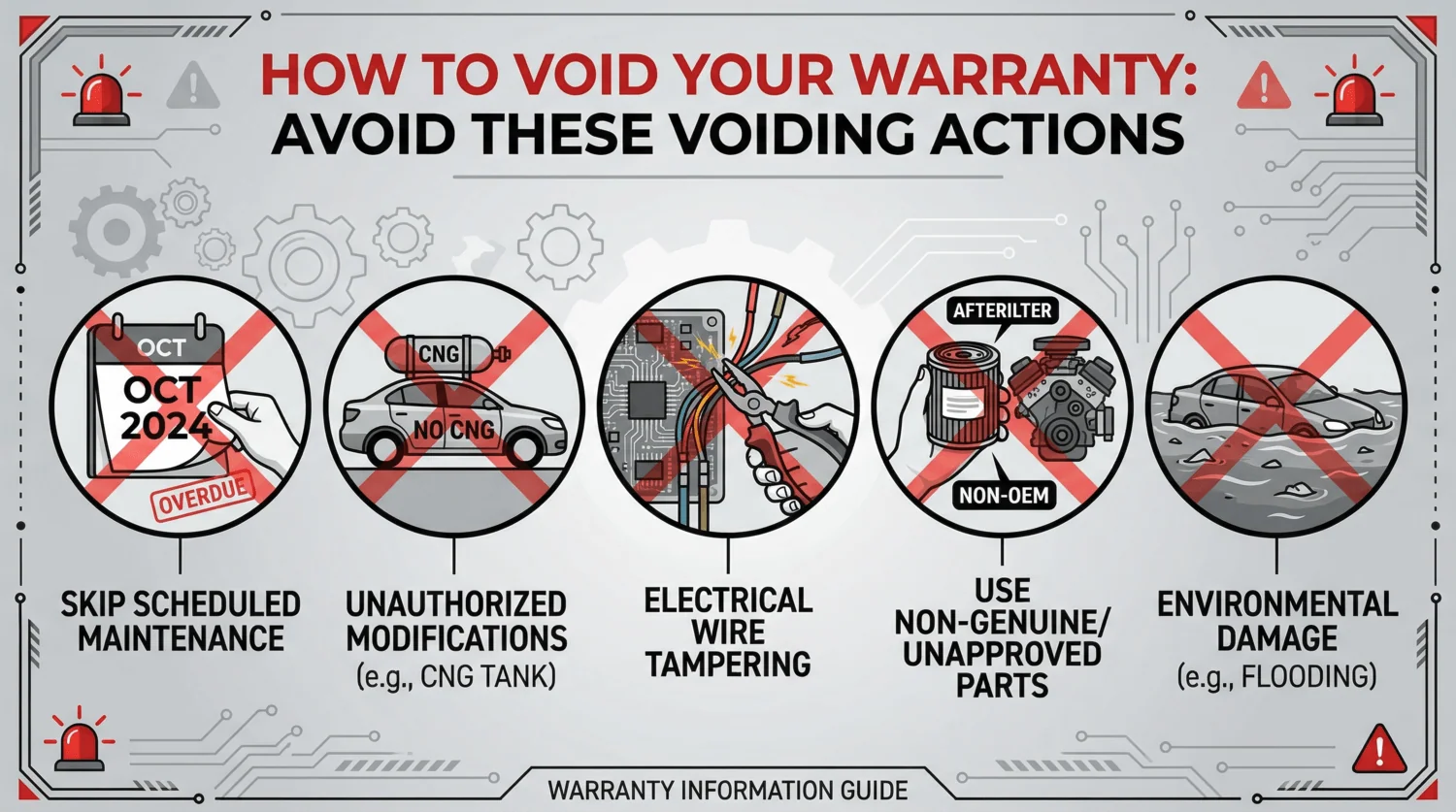
This section could save you lakhs. Many buyers unknowingly void parts of their coverage through common actions. Here are the biggest traps.
1. Missing Scheduled Services
This is the single biggest warranty killer. Miss a service or delay it significantly beyond the grace period (typically a few hundred km or a couple of weeks), and the manufacturer gains legal standing to deny claims on components linked to that missed maintenance.
Skipped an oil change and then the engine fails six months later? That claim will get rejected.
But here’s a nuance most people don’t know. A landmark consumer court ruling established that a missed service does not void your entire vehicle’s warranty. The manufacturer can only reject claims on components directly affected by the skipped maintenance. Your electrical system coverage stays intact even if you missed an engine oil service.
Aftermarket performance accessories, ECU remaps, unauthorized CNG/LPG kits, structural alterations. All of these void warranty on the affected systems.
The CNG trap catches a lot of buyers. If you’re getting a CNG kit installed, it absolutely must be the manufacturer-approved option with proper documentation. Unauthorized kits void both engine and fuel system coverage.
3. Aftermarket Electrical Installations
This catches more owners off guard than you’d expect. Dealerships love telling customers that any external installation voids the entire electrical warranty. That’s not how it actually works, though the truth depends on how the installation was done.
If you’re using plug-and-play devices through the 12V socket or USB port, you’re completely fine. Phone chargers, portable GPS units, phone mounts with wireless charging. None of these touch the factory electrical system, so your warranty stays untouched.
Hardwiring a dashcam into the fuse box for parking surveillance? That can lead to claim rejections if the installation draws parasitic current or uses non-automotive grade wiring.
Cutting or splicing factory wires? That’s an absolute violation. Immediate warranty denial for the electrical system. No exceptions.
The safe approach: stick to 12V sockets or properly integrated fuse taps. Preserve your original factory wiring harness completely.
Getting work done at unauthorized service centers or using non-genuine parts can void coverage for those specific components. India’s Right to Repair framework is pushing for more openness here, but there’s a practical problem. Modern cars often require cryptographic “pairing” of replacement parts through the OEM’s proprietary diagnostic tools. You might legally replace a part at an independent garage, but it may not function correctly without dealer-level software pairing.
5. Neglect and Abuse
Driving with a known oil leak, running the engine with insufficient coolant, improper battery jump-starting, or submerging the engine by driving through deep waterlogged roads during monsoon. All of this falls under owner negligence and every manufacturer universally excludes it from coverage.
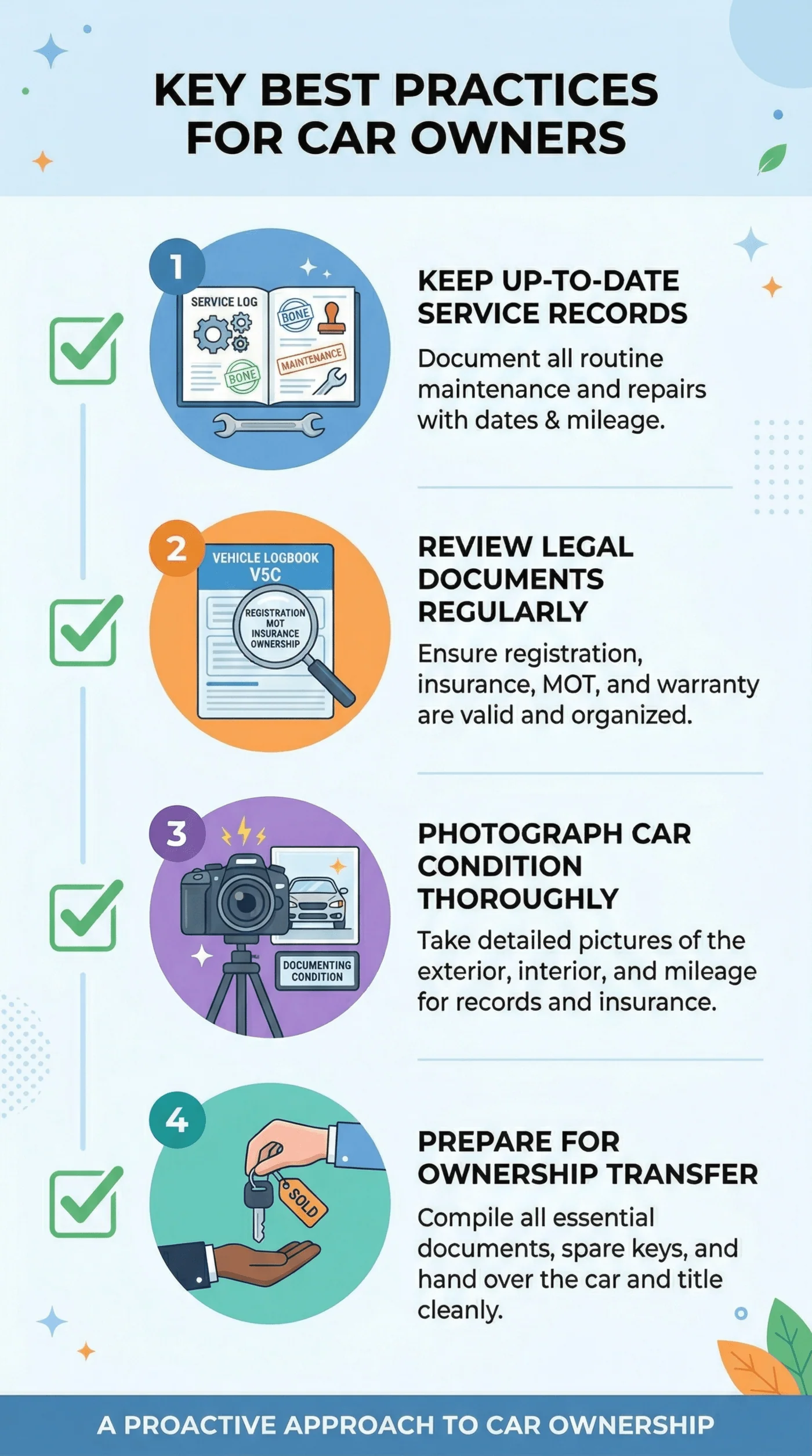
Your best defense against warranty disputes? Thorough, consistent documentation throughout your ownership period. Photograph your car’s condition at every service drop-off. Never sign a blank or vaguely worded Job Card. Make sure the service advisor writes down your exact symptoms and submits the vehicle for a “Warranty Inspection,” not a general paid service.
Is Extended Warranty Worth It?
Every buyer gets this question at the dealership, usually while the sales advisor is pushing multiple add-on packages. Here’s an honest assessment based on powertrain type and usage pattern.
Buy It Without Thinking Twice
Cars with turbo-petrol engines, diesel with DPF, or DCT/DSG automatics. These powertrains carry higher failure risk compared to naturally aspirated petrol engines with manual or torque-converter automatics. Dry-clutch DCTs from Hyundai and Kia are sensitive to thermal stress in heavy stop-and-go traffic. Transmission mechatronics repairs cost ₹45,000 to ₹5,00,000+. An extended warranty costing ₹25,000 on a mid-size SUV with ADAS and a panoramic sunroof is one of the rare insurance-type products where the buyer frequently comes out ahead.
Keeping the car for 5+ years. After the standard warranty period, components start aging. Electronics degrade, rubber seals perish, sensors become unreliable. Years 4 through 7 are when you need coverage the most.
High-mileage driving (20,000+ km/year). If your warranty is capped at 1,00,000 km, you’ll burn through it in under 5 years regardless of the time limit. Go with a brand offering unlimited km coverage, or extend the warranty.
You Can Probably Skip It
Naturally aspirated petrol with manual or torque-converter automatic. These are the workhorses of the Indian market, proven powertrains that rarely need major warranty intervention during years 4 and 5. The standard 3-year coverage usually suffices for this combination.
Selling within 3 years. You won’t extract value from extended coverage you never use. An active warranty does help resale marginally, but is that worth ₹15,000 to ₹30,000 upfront? Probably not.
Low-mileage city use (under 8,000 km/year). Here’s something to weigh carefully. Your warranty will expire by time well before you hit the km limit. That sounds like a reason to skip. But age-related failures like sensor degradation, rubber seal perishing, and electronics issues happen based on calendar age, not odometer reading. So even low-mileage cars face risk in years 4 through 7.
Real Numbers That Put It in Perspective
An extended warranty for two additional years on a Hyundai Creta costs roughly ₹25,000 to ₹35,000. Now look at individual repair costs without warranty: AC compressor replacement runs ₹15,000 to ₹25,000. An infotainment unit failure costs ₹30,000 to ₹60,000. One ADAS radar sensor is ₹20,000 to ₹40,000. A single major repair in year 4 or 5 can exceed the entire extended warranty cost. That’s the math.
Watch Out for Dealer Pressure Tactics
Sales advisors sometimes weaponize warranty to push unnecessary purchases. You’ll hear things like “installing aftermarket accessories voids your whole warranty” (false, only the directly affected component), “you must buy insurance from us or the warranty is void” (completely false), or “this price is only available today” (you can typically buy extended warranty any time before standard coverage expires).
Legally, a manufacturer can only void warranty for the specific component affected by a modification, and they must prove causality. Your overall vehicle coverage stays intact.
How to Handle a Warranty Claim
Getting your claim approved smoothly requires preparation. Here’s what works.
Be specific. Don’t walk in saying “the car makes a noise.” That’s too vague. Give the service advisor something concrete to work with: “A metallic grinding noise from the front-left suspension when going over speed breakers at 20 km/h.” Precise complaints are harder to dismiss.
Insist on warranty inspection. If the failure is ambiguous, expect the dealership to quote you for a paid repair first. That’s standard practice. Push back. Ask that the repair gets logged as a warranty claim for the manufacturer’s regional technical team to evaluate, not just the local service advisor.
Get rejections in writing. Verbal “it’s not covered” statements mean nothing. If they’re rejecting your claim, demand official documentation via email citing the exact exclusion clause from the warranty manual. Written rejections create accountability and a paper trail for escalation.
Escalation works, use it. Email the manufacturer’s regional service manager. Call the brand’s central customer care number. And yes, post on social media with specifics, screenshots, Job Card numbers. Manufacturers care deeply about public perception. Claims initially denied at the dealership level get approved on “goodwill” basis surprisingly often after a visible escalation.
Consumer court is effective in India. If nothing else works, Consumer Disputes Redressal Commissions consistently hold manufacturers and dealers jointly liable for defects reported within the warranty period.
Warranty Myths vs Reality
| Myth | Reality |
|---|---|
| Installing a dashcam voids the electrical warranty | Using a 12V socket or USB port doesn’t affect warranty. Hardwiring with fuse taps is generally accepted. Cutting or splicing wires results in immediate voiding. |
| Extended warranty and car insurance are the same thing | Warranties cover internal mechanical/electrical failures from defects. Insurance covers external damage like accidents, floods, theft, rodent damage. |
| Used cars don’t have manufacturer warranty | Factory and extended warranties are tied to the VIN, not the buyer. They transfer to the second owner if RC transfer and OEM notification are completed. |
| EV “Lifetime” battery warranty means forever | “Lifetime” caps at 15 years legally, applies only to the first owner, requires active telematics subscription, and covers degradation only below 70% State of Health. |
| Missing one routine service voids your entire warranty | It doesn’t void everything. The manufacturer can only reject claims on components directly related to the missed maintenance. |
FAQs
What does car warranty cover?
A standard car warranty covers manufacturing defects in the powertrain (engine, gearbox, transmission), fuel system, electrical components (ECU, sensors, wiring harnesses), factory-fitted infotainment, AC system (compressor, condenser), suspension, steering, emission components. Wear-and-tear items like brake pads, clutch plates, tires aren’t covered. Those carry separate warranties from their respective OEMs.
Is extended warranty worth buying?
For cars with turbo-petrol engines, DCT/DSG automatics, diesel engines with DPF, or vehicles loaded with ADAS features, yes. A single component failure in year 4 or 5 can cost more than the extended warranty itself (₹7,000 to ₹50,000 depending on brand). For naturally aspirated petrol cars with manual transmission and low annual mileage, the standard 3-year coverage is usually enough.
What voids car warranty in India?
The most common warranty-voiding actions: missing scheduled services at authorized centers, installing unauthorized CNG/LPG kits, aftermarket parts that damage related systems, cutting factory wiring for aftermarket electrical accessories, ECU remapping, repairs at unauthorized centers with non-genuine parts. A modification only voids warranty for the directly affected component, not the entire vehicle.
Can I service my car outside the dealership and keep the warranty?
India’s Right to Repair framework technically supports this. In practice, most modern cars need OEM diagnostic tools for part pairing and software calibration. If you get serviced outside and a failure happens later, the manufacturer may argue the independent service caused the problem. For warranty preservation during the coverage period, authorized service centers are the safer choice.
Does warranty transfer when I sell my car?
Yes. Warranties are tied to the Vehicle Identification Number (VIN), not the owner. If the car is sold within the active warranty period, coverage transfers to the new owner. The buyer must complete the RC transfer at the RTO and update the manufacturer’s records with new ownership details. Skipping this step can cause claim delays or outright rejections.
What’s the difference between warranty and AMC?
Warranty covers unpredictable mechanical and electrical failures from manufacturing defects at zero cost. An AMC is a prepaid package for predictable routine service work: oil changes, filter replacements, basic inspections. An AMC locks in service prices against inflation. They protect against different things, and you need both during ownership.
Understanding your warranty isn’t about reading legal fine print for fun. It’s about keeping money in your pocket during ownership. Check your warranty booklet, maintain your service records, document every dealership interaction, and decide on extended coverage based on your powertrain and driving pattern.
Planning to buy your first car? Our complete buying guide walks you through every step.