
Buying a car at the wrong time can cost you ₹50,000 to ₹2 lakh more than it should. That’s real money, gone because you didn’t wait two months. Or because you waited too long. Start by checking the current on-road price in your city so you know your baseline.
Car prices in India follow predictable cycles. Pair timing with our dealership negotiation tactics for maximum savings. Manufacturers hike prices every January. Dealers chase targets every March. Festival seasons bring bundled offers, and year-end clearance dumps older stock at steep discounts. Once you understand these patterns, timing your purchase to save the most money becomes pretty straightforward.
Here’s a month-by-month breakdown of when discounts peak, which brands offer what, and how to combine multiple offers for the best possible deal.
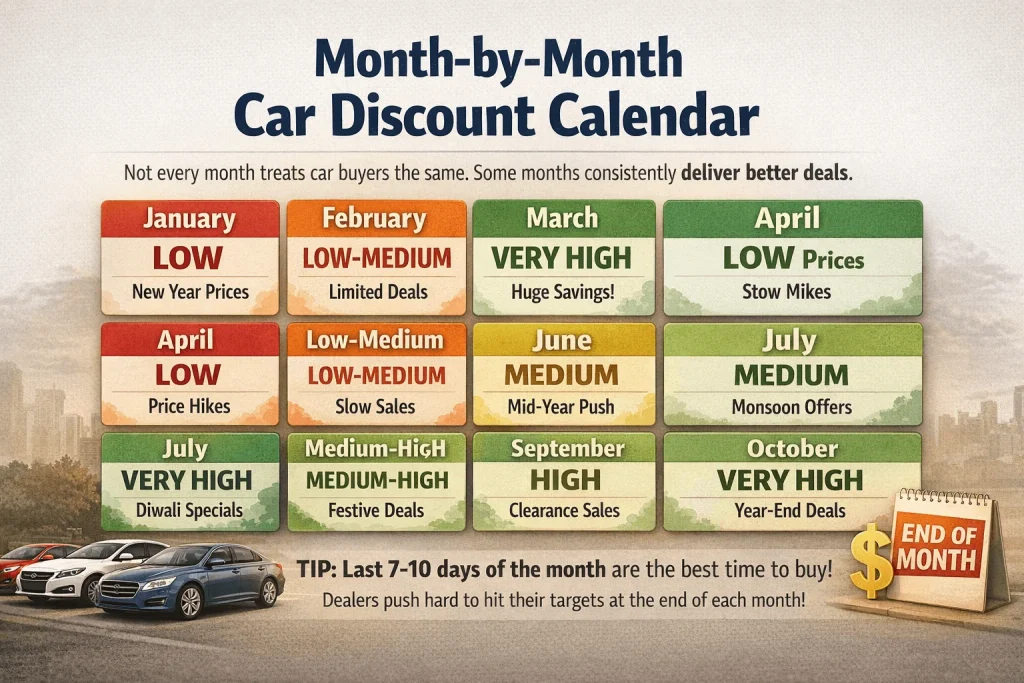
Month-by-Month Car Discount Calendar
Not every month treats car buyers the same. Some months consistently deliver better deals because of how the industry’s target deadlines and inventory pressures play out across the year.
| Month | Discount Level | What’s Happening | Best For |
|---|---|---|---|
| January | Low | New prices kick in after annual hikes. Fresh stock arrives. | Avoid buying unless urgent |
| February | Low-Medium | Dealers settle into new targets. Limited offers on slow movers. | Negotiating on unpopular models |
| March | Very High | Financial year-end. Dealers desperate to hit annual targets. MY25 stock clearance. | Maximum cash discounts, business buyers claiming depreciation |
| April | Low | New FY, fresh targets, price hikes take effect. Discounts vanish overnight. | Worst month to buy |
| May | Low-Medium | Summer slowdown. Some offers on previous quarter leftovers. | Only if a specific model has excess stock |
| June | Medium | Dealers push for Q1 targets. Early monsoon offers appear. | Select models with inventory buildup |
| July | Medium | Monsoon lull. Footfall drops, dealers get flexible. | Good for negotiation when showrooms are empty |
| August | Medium-High | Onam offers in Kerala. Ganesh Chaturthi deals in Maharashtra. | Regional festivals bring targeted offers |
| September | High | Navratri season kicks off. Manufacturers announce festive schemes. | Booking early before the Navratri rush |
| October | Very High | Navratri, Dussehra, Dhanteras, Diwali. Peak festive offers with free insurance, accessories, low-rate loans. | Bundled value deals |
| November | High | Post-Diwali clearance continues. Dealers still riding festive momentum. | Leftover festive stock at good prices |
| December | Very High | Year-end clearance. Calendar year closes. Dealers dump remaining MY stock. | Deepest pure cash discounts |
One thing most guides won’t tell you: the last 7-10 days of any month are better than the first week. Dealers chase monthly targets, so a sales executive on March 25th is far more flexible than one on March 3rd. This applies to every month, not just the peak ones.
Why 2026 Is Different: The GST 2.0 Factor
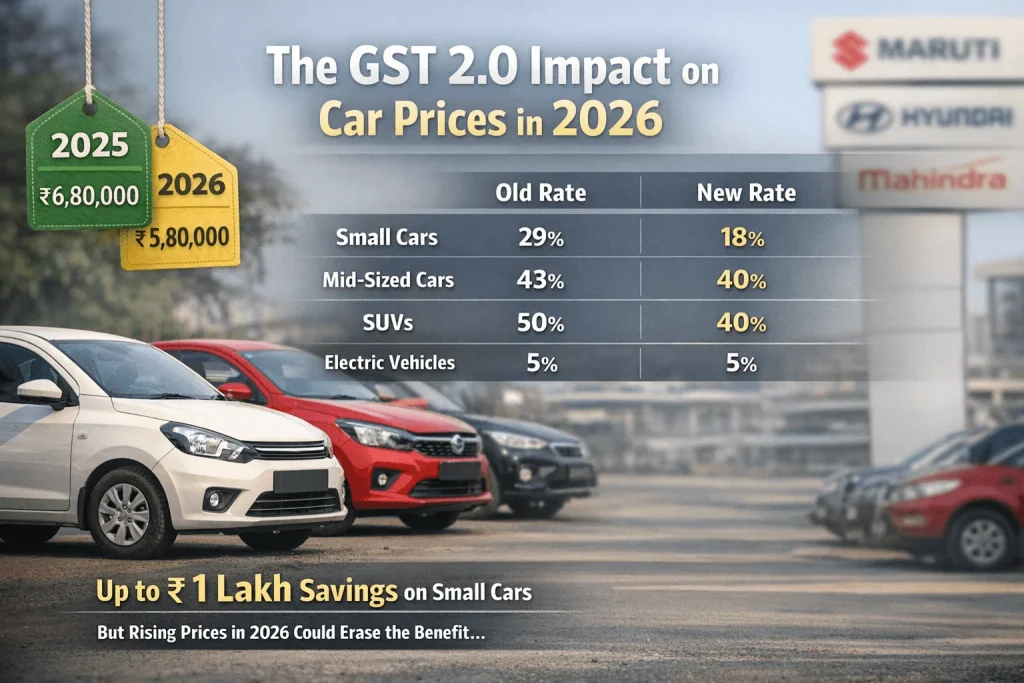
Before you look at seasonal discounts, know this: 2026 car prices are already lower than last year for certain segments. The GST 2.0 reforms that rolled out in September 2025 slashed effective tax rates on sub-4-metre cars significantly.
| Vehicle Category | Old Rate (GST + Cess) | New GST 2.0 Rate |
|---|---|---|
| Small Cars (Petrol/CNG, ≤1200cc, ≤4m) | 29% | 18% |
| Small Cars (Diesel, ≤1500cc, ≤4m) | 31% | 18% |
| Mid-Sized Cars (>1500cc, >4m) | 43% | 40% |
| SUVs (>1500cc, >4m, >170mm clearance) | 50% | 40% |
| Electric Vehicles | 5% | 5% |
That’s a 10-13 percentage point drop for small cars, translating to ₹40,000 to ₹1,20,000 in direct savings compared to pre-September 2025 prices. So any seasonal discount you get in 2026 sits on top of an already reduced base. Rare alignment.
But here’s the catch. Annual price hikes are slowly clawing back this benefit. In January 2026, most manufacturers raised prices by 2-3%. BMW went up 6%. More hikes are confirmed for April 2026 from Maruti Suzuki, Hyundai, Tata, and Mahindra among others. Wait too long and the GST 2.0 benefit keeps shrinking.
Year-End vs Festival Season: When Are Discounts Actually Highest?
This is the question every buyer asks. Diwali or December? The answer depends on what kind of savings matter more to you.
Festival Season (October-November): Best for Bundled Value
During Navratri and Diwali, manufacturers don’t just drop prices. They build packages that combine multiple benefits:
- Cash discounts on the ex-showroom price
- Free or heavily discounted first-year insurance
- Extended warranty at no extra cost (standard 2 years becoming 4-5 years)
- Free accessory kits worth ₹15,000 to ₹30,000
- Low-interest financing from partnered banks and NBFCs (rates cut by 0.25-1%)
- Zero down payment schemes
Total value of these bundled offers typically ranges from ₹50,000 to ₹3 lakh depending on the model. The Maruti Brezza, Hyundai Creta, Tata Nexon see benefits in the ₹40,000 to ₹80,000 range. Slow-moving models get far more aggressive treatment.
But there’s a catch most people miss. Dealerships actually have more pricing power during festivals, not less. Why? Dhanteras and Diwali bring massive footfall from buyers who culturally need to take delivery on an auspicious date. When demand is that rigid, dealers don’t need to budge much on the base price. They substitute deep cash cuts with perceived-value additions like accessory kits and corporate gifts instead of real money off the sticker price.
So what should you do? If you want Diwali delivery for auspicious reasons, finalize your booking and negotiate the price 30-45 days before the festival. Showroom footfall is much lower in early September. Lock in your price then. Schedule delivery for your preferred muhurat date later.
December: Best for Pure Cash Discounts
December is when dealers get genuinely desperate. Two forces hit at once:
Annual sales targets. Dealer incentives from manufacturers (often worth crores) depend on hitting yearly volume numbers. Missing by even a few units means losing massive bonuses.
Inventory aging. Any car manufactured in 2025 becomes “old stock” the moment January hits. MY25 vehicles carry a stigma in the market, making them harder to sell once the calendar flips.
This combination produces the deepest cash discounts of the year. Dealers will cut the base price more aggressively than at any other time because they’re fighting two battles simultaneously.
March: The One Most People Overlook
March doesn’t get the attention Diwali and December do, but the data says it’s arguably the single best month for pure financial savings. Here’s what makes it different.
Dual target pressure. Dealers face monthly AND annual targets at the same time. The financial year ends March 31st, so everyone from the manufacturer to the dealer to the sales exec on the floor is scrambling to close numbers before the clock runs out.
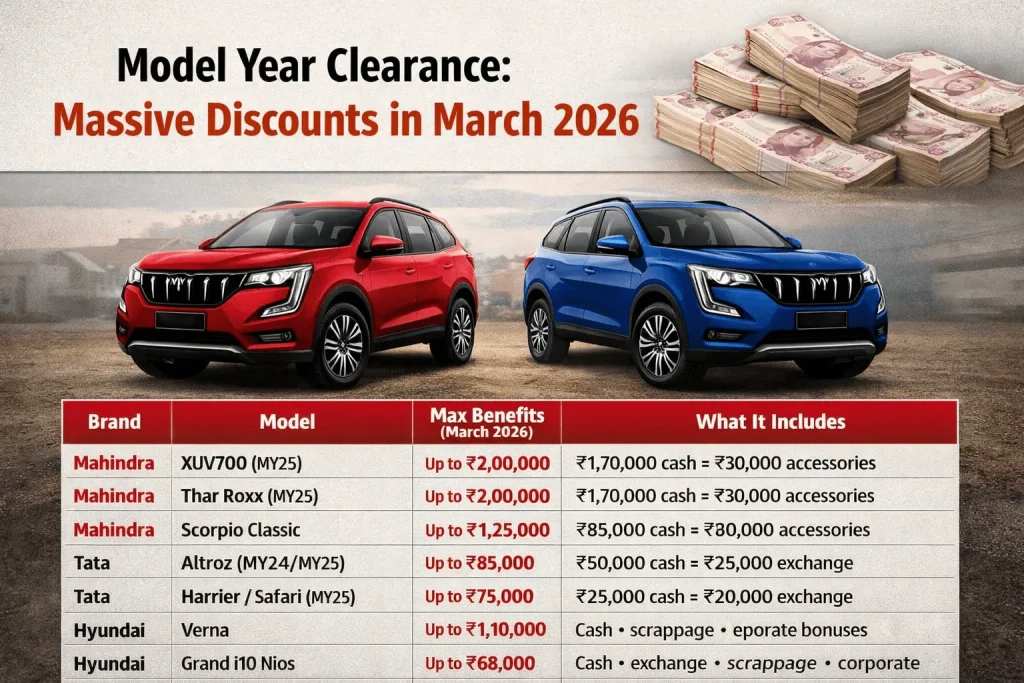
Model year clearance at massive discounts. March 2026 is the sweet spot for MY25 clearance. The price gap between old and fresh stock is enormous. Look at the actual numbers from March 2026:
| Brand | Model | Max Benefits (March 2026) | What It Includes |
|---|---|---|---|
| Mahindra | XUV700 (MY25) | Up to ₹2,00,000 | ₹1,70,000 cash + ₹30,000 accessories |
| Mahindra | Thar Roxx (MY25) | Up to ₹2,00,000 | ₹1,75,000 cash + ₹25,000 accessories |
| Mahindra | Scorpio Classic | Up to ₹1,25,000 | ₹85,000 cash + ₹40,000 accessories |
| Tata | Altroz (MY24/MY25) | Up to ₹85,000 | ₹60,000 cash + ₹25,000 exchange |
| Tata | Harrier/Safari (MY25) | Up to ₹75,000 | ₹25,000 cash + ₹50,000 exchange |
| Hyundai | Verna | Up to ₹1,10,000 | Cash + scrappage + upgrade bonuses |
| Hyundai | Grand i10 Nios | Up to ₹68,000 | Cash + exchange + scrappage + corporate |
| Maruti | Swift | Up to ₹50,000 | ₹25,000 cash + ₹20,000 exchange + ₹5,000 corporate |
| Maruti | Brezza | Up to ₹45,000 | Consumer and exchange bonuses |
See the pattern? An MY25 Mahindra XUV700 gets up to ₹2 lakh off while the same car in MY26 trim gets maybe ₹50,000 to ₹70,000. That’s a ₹1.3 lakh gap just because of the manufacturing date.
Tax benefits for business buyers. If you’re self-employed, run a business, or buy through a company, registering before March 31st lets you claim depreciation under Section 32 for the entire financial year. That alone can save significant tax money depending on your slab.
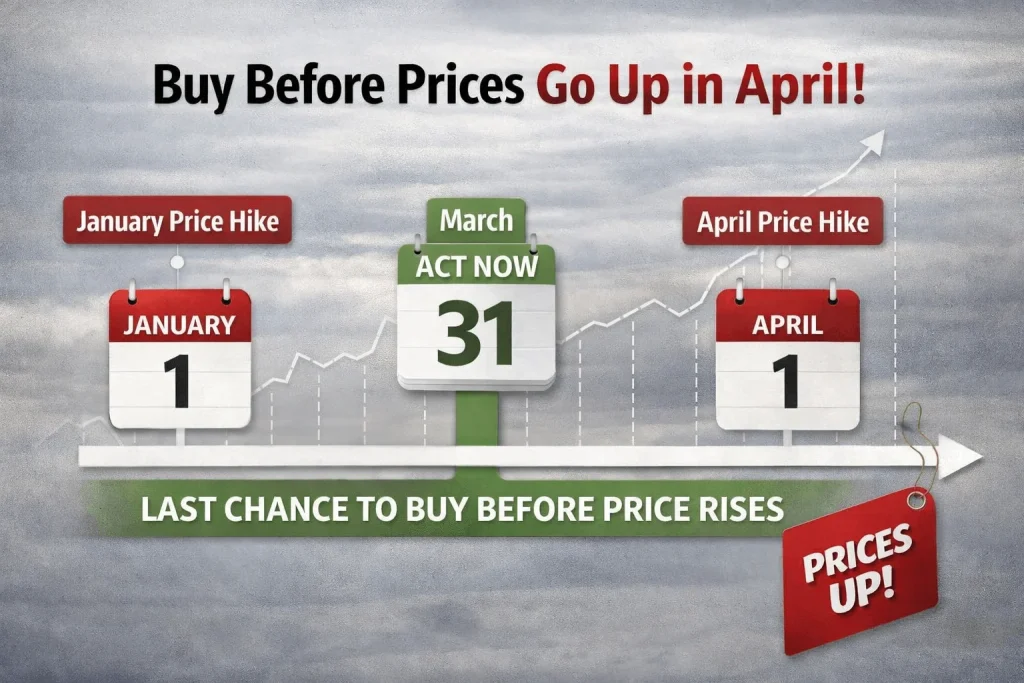
The April cliff. After March 31st, discounts evaporate. New FY targets are set, price hikes kick in, and the urgency disappears. Maruti Suzuki, Hyundai, Tata, Mahindra have all confirmed April 2026 price increases of 1.5-3%. BMW has gone up to 6%. Buying in March lets you dodge both the discount drought and the price hike.
So Which Is Actually Best?
| Factor | Festival Season (Oct-Nov) | December | March |
|---|---|---|---|
| Cash discount depth | Medium | High | Very High (on MY25 stock) |
| Bundled offers value | Very High | Medium | Medium-High |
| Loan rate benefits | Yes (0.25-1% lower) | Sometimes | Sometimes |
| Negotiation room | Low (high footfall) | High | Very High |
| Tax benefits | No | No | Yes (business buyers) |
| Auspicious timing | Yes (Dhanteras/Diwali) | Limited | No |
| April price hike avoided | N/A | N/A | Yes |
If you just want the lowest price? March. If you want bundled packages with auspicious delivery? Diwali, but negotiate a month early. December sits in between, strong on cash discounts with decent negotiation room.

BS Norms and Model Year Transitions
Regulatory timelines can save you from buying at the wrong time. Or help you grab deals that exist purely because of compliance pressure.
CAFE-III: Watch This If You’re Considering an EV or Hybrid
Corporate Average Fuel Efficiency (CAFE-III) norms were originally slated for April 2027. These force manufacturers to maintain fleet-wide CO2 emission ceilings. To meet targets, automakers need enough EV and hybrid sales to offset their SUV and large car emissions.
What does this mean for you? If the government holds firm on the 2027 deadline, expect manufacturers to aggressively discount electric and hybrid models in late 2026 to boost fleet-average numbers. We could see unprecedented deals on EVs and hybrids in Q3-Q4 2026. If you’re eyeing an electric car, waiting until the second half of 2026 might reward your patience.
There’s already a wave of next-gen EVs launching between Q2 and Q4 of 2026. The Maruti e Vitara (₹17-22.5 lakh), Tata Sierra EV (₹15 lakh+), Skoda Kushaq Facelift, Toyota Urban Cruiser Ebella. When these arrive, older EVs on dealer lots will see heavy discounts to make room.
BS7: Not Urgent but Worth Knowing
BS7 emission norms are expected around 2027-2028. When they arrive, they’ll add ₹30,000 to over ₹1 lakh to vehicle prices. Diesel cars get hit hardest because of the extensive exhaust system re-engineering required.
For 2026 buyers, BS7 isn’t something you need to rush for. But if you’re buying diesel, the future regulatory direction makes diesel more expensive to produce, not less. Keep that in mind for your resale calculations.
The Model Year Trap (and Opportunity)
Here’s something most buyers overlook completely. A car’s model year comes from its manufacturing date, not when you registered it. An MY25 car sold in March 2026 will be valued as one year older than an MY26 car when you try selling it five years down the line. That gap directly hits your resale price.
Should you care? Depends on your plans:
- Keeping 3-4 years: Go with MY26. The resale penalty on the older model year will eat into whatever discount you got upfront.
- Keeping 7+ years: Grab the MY25 at a steep discount. After 7-8 years, residual values flatten regardless of model year. You pocket the ₹50,000 to ₹2,00,000 upfront saving without any meaningful resale hit.
A Mahindra Thar Roxx illustrates this perfectly. The MY25 version gets ₹2 lakh in benefits. The MY26 variant? Roughly ₹1,15,000. That ₹85,000 gap is yours to keep if you’re holding long-term.
How to Stack Discounts for Maximum Savings
The biggest mistake buyers make is treating the discount as one number. In reality, there are multiple independent discount streams you can combine. Stacking them right can save you ₹50,000 to ₹1.5 lakh over the advertised offer.
Seven Discount Layers You Can Combine
1. Dealer/OEM Cash Discount
The headline number. Ranges from 1-5% on popular models, up to 10-15% on slow sellers. This is your starting point for every negotiation.
2. Exchange Bonus
Trade in your old car at the dealership for an additional ₹15,000 to ₹50,000 off. Fair warning though: dealers typically undervalue trade-ins by 10-15%. You’ll almost always do better selling privately first and then negotiating a higher cash discount on the new car.
3. Corporate Discount
Work at an MNC, PSU, or government department? Doctor, chartered accountant, or teacher? You’re likely eligible for a manufacturer corporate discount of ₹5,000 to ₹25,000. This comes from the manufacturer’s pocket, not the dealer’s, so it stacks on top of everything else. These benefits often extend to immediate family members too.
What brands offer right now (March 2026):
- Maruti Suzuki: Up to ₹5,000 on Swift, ₹2,500 on WagonR
- Hyundai: “Pride of India” benefit of ₹3,000 for government employees
- Tata Motors: SBI YONO channel and corporate alliance offers
4. Loyalty Bonus
Already own a car from the same brand? ₹5,000 to ₹20,000 extra. Not all manufacturers offer this consistently, so you need to ask specifically.
5. Scrappage Incentive
Got a vehicle older than 15 years or one that’s failed its fitness test? The Vehicle Scrappage Policy gives you a certificate that unlocks additional discounts. Important: this is separate from the exchange bonus. You can’t use both on the same deal.
6. Finance Discount
Dealers earn roughly 1% commission from partner banks when you take a car loan through them. Use this to your advantage. Get pre-approved from your own bank first. Then tell the dealer you’ll take their finance if they can match or beat your rate. The dealer wants that commission badly enough to push their partner bank for better terms.
7. Insurance Savings
This is where dealers make their fattest margins. Dealership insurance quotes are inflated by up to 40% compared to what you’d pay on the open market. Never accept the first quote. Get parallel quotes from PolicyBazaar, Acko, or other online aggregators. You can negotiate 30-35% off the dealer’s insurance premium (excluding the third-party liability component, which is fixed by IRDAI).

What This Looks Like in Practice
Say you’re buying a Maruti Swift in March 2026:
| Discount Type | Savings |
|---|---|
| Cash discount (FY-end offer) | ₹25,000 |
| Exchange bonus (old car trade-in) | ₹20,000 |
| Corporate discount (MNC employee) | ₹5,000 |
| Insurance savings (online vs dealer quote) | ₹8,000 to ₹12,000 |
| Accessories (refuse dealer kit, buy aftermarket) | ₹5,000 to ₹10,000 saved |
| Total | ₹63,000 to ₹72,000 |
On a car priced around ₹6.5 lakh ex-showroom, that’s nearly 10-11% in total savings. And this is on a Maruti Swift, one of India’s best sellers that barely needs discounting. On slower models, the total goes significantly higher.
Three Charges You Should Push Back On
A few line items on the dealer’s quotation are negotiable or outright avoidable:
Handling and logistics charges (₹5,000 to ₹15,000). Consumer forums have repeatedly called these legally questionable. Push back firmly. Many buyers get these removed entirely.
Pre-bundled accessory kits. Dealers mark up accessories by 25-30%. That “essential kit” with floor mats, mud flaps, perfume, door visors is overpriced. Refuse the mandatory bundle. Buy individual accessories from the aftermarket at half the cost.
Extended warranty at full sticker price. Extended warranties carry a 30-40% dealer margin. Don’t pay retail for them. Lock in your ex-showroom discount first. Then demand the extended warranty as a freebie to close the deal. Dealers will often agree because the margin on the warranty is high enough to absorb.
FAQs
Which month has the best car discounts in India?
March consistently offers the deepest cash discounts because of financial year-end pressure on both dealers and manufacturers. December is a close second due to calendar year-end clearance. Diwali (October-November) offers the best bundled deals combining cash discounts with free insurance and accessories. For pure cash savings, March wins. For overall package value, Diwali is strong if you negotiate early.
Is it cheaper to buy a car in March?
Yes. March is one of the cheapest months to buy a car in India. Dealers face dual pressure from monthly and annual targets. Manufacturers push “Mega March” clearance schemes. MY25 stock gets heavily discounted before April price hikes arrive. Business buyers also benefit from tax depreciation claims if the car is registered before March 31st.
Do car prices increase in January?
Almost always. Every January, most car manufacturers announce annual price hikes of 2-3% citing rising input costs, raw material prices, and rupee depreciation. In January 2026, Mercedes-Benz went up 2%, BMW 3-6%, MG Motor 2%, Nissan 3%, and Renault 2%. This makes late December a smart time to finalize your purchase before the new year hike kicks in.
Should I buy a car during Diwali or wait for December?
If you want the lowest outright price, wait for December. If you prefer bundled value with free insurance and extended warranty thrown in, Diwali is better. The smartest approach? Negotiate and book during early September when showroom footfall is low. Lock in your price. Then schedule delivery for your preferred Dhanteras or Diwali date.
Is buying an MY25 car in 2026 a good deal?
It can be excellent if you’re keeping the car 7+ years. The upfront discount (₹50,000 to ₹2,00,000 depending on model) far exceeds the resale penalty after 7-8 years, when residual values flatten regardless of model year. But if you plan to sell within 3-4 years, buy MY26. The newer model year holds value better in the used market, and the resale gap will eat into your initial savings.
What’s the worst time to buy a car in India?
April. New financial year targets reset, annual price hikes take full effect, and dealers have zero urgency to offer discounts. January and February are also lean months with limited offers as fresh stock arrives at revised prices.
—
Planning your car purchase? Our complete buying guide walks you through every step from research to registration. And when you’re ready to talk numbers at the showroom, here’s how to negotiate the best car price so you don’t leave money on the table.